Guide to Shirt Collar Styles for Modern Men
A shirt collar does more than frame your face. It decides whether a look feels sharp, relaxed, traditional or confidently offbeat before anyone notices the print, fabric or cuff. This guide to shirt collar styles is built for men who want every detail working as hard as the shirt itself.
A guide to shirt collar styles that starts with proportion
The right collar is not about following a single rule. It depends on your face shape, the occasion, whether you wear a tie and how much personality you want the shirt to carry. A wide collar can bring presence to a lean face; a narrower point can add structure to a rounder one. But these are useful starting points, not a uniform.
Think about the collar as the architecture of the shirt. It sits closest to your face, holds its shape through the day and sets the mood for everything beneath it. A crisp collar makes a printed shirt feel polished. A softer one gives an Oxford or short-sleeve style a more easy-going edge.
The key is balance. If your shirt has a bold geometric pattern or a standout colour palette, choose a collar that gives the design room to breathe. If the shirt is plain, the collar can do more of the talking.
The main shirt collar styles to know
Point collar
The point collar is the dependable classic. Its tips angle down with a relatively narrow spread, creating a clean vertical line that suits office dressing, weddings and smarter evenings out. It works particularly well with a smaller tie knot, such as a four-in-hand, and is an easy option under a fitted blazer.
Its strength is restraint. A point collar brings order to a vivid shirt without making the whole look feel overly formal. If you favour a defined jawline or have a rounder face, its downward shape can be especially flattering.
There is a trade-off, though. A very narrow point collar can look a little conservative if the rest of your wardrobe is expressive. Look for a modern proportion rather than an exaggeratedly slim shape.
Semi-cutaway collar
For most men, the semi-cutaway is the sweet spot. It sits wider than a point collar but stops short of the drama of a full cutaway. That gives you plenty of versatility: open it for a smart-casual dinner, add a tie for work or pair it with a textured jacket when the dress code is vague but you still want to look considered.
The wider opening frames the face well and makes room for a fuller tie knot without becoming fussy. It also has enough presence to hold its own against an artistic print. This is the collar for someone who wants polish with a bit more confidence.
Cutaway collar
A cutaway collar makes an entrance. Its points spread widely apart, creating a broad, open shape across the neck. Worn with a tie, it is designed for a larger knot such as a Windsor or half-Windsor. Worn open, it feels assured, contemporary and slightly continental.
This shape is particularly strong on taller men, men with longer faces and anyone who prefers a more directional take on tailoring. It can also offset a sharp, narrow chin by adding width at the collarbone.
The cutaway is less forgiving when the fit is wrong. Make sure the collar sits neatly against the neck and the shirt is not pulling across the chest. A wide spread only looks relaxed when the structure is right.
Button-down collar
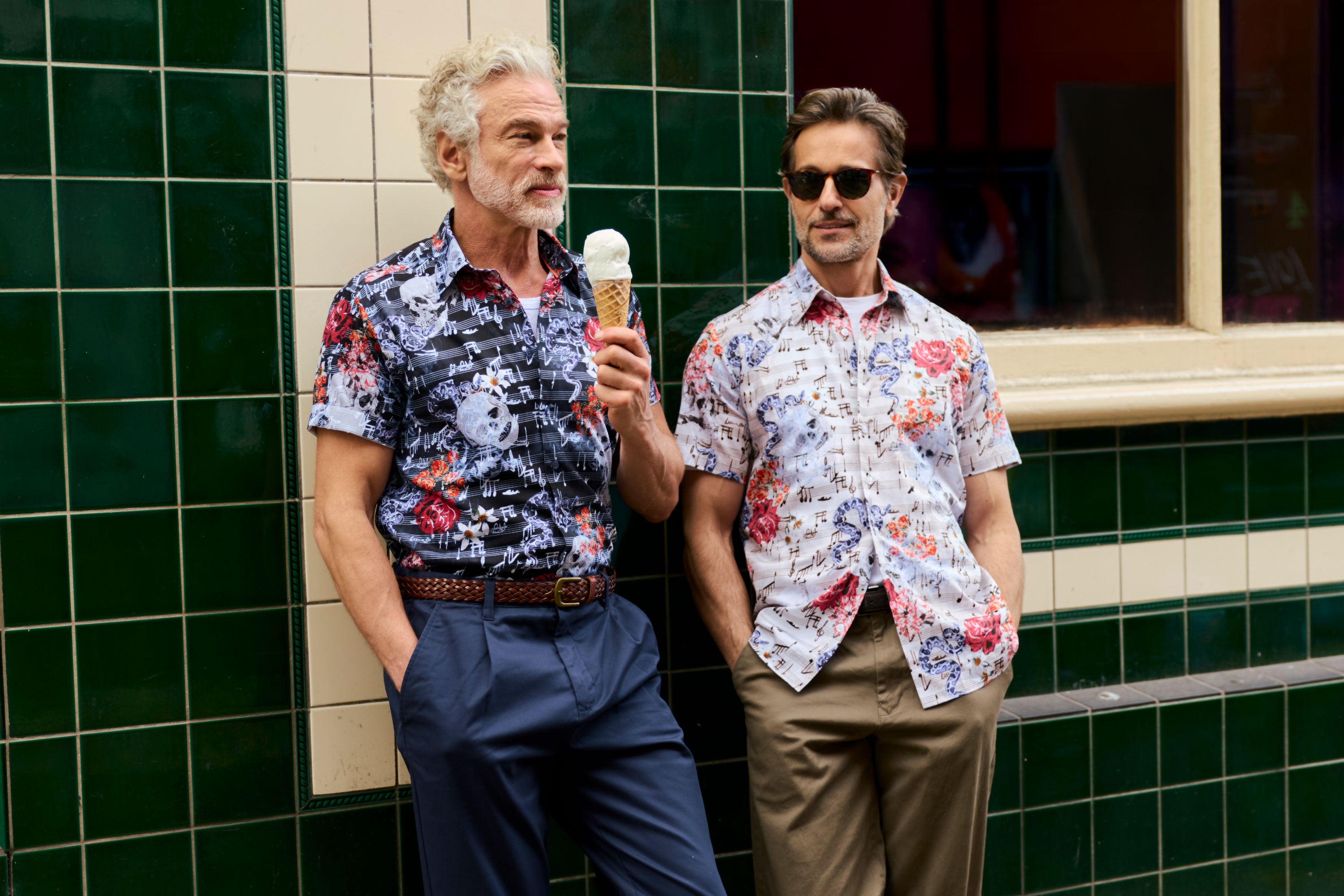
The button-down collar began as a practical sporting detail and became a permanent part of smart-casual menswear. Small buttons secure the collar points to the shirt, stopping them from lifting or wandering. The result is neater than an open collar, but less formal than a point or cutaway.
It is a natural match for Oxford shirts, chinos, knitwear and unstructured jackets. It also works brilliantly when you want to wear a shirt with personality without looking like you are heading straight to a boardroom. A button-down gives a bold print a grounded, easy confidence.
Traditionally, it is best worn without a tie. You can ignore that convention if the setting is relaxed enough, but a button-down with a formal suit and a broad silk tie often feels like two different dress codes meeting halfway.
Club collar
The club collar is recognisable by its rounded ends. It is a smaller detail with a big visual effect, bringing a vintage edge to contemporary dressing. It looks particularly good with a lean jacket, fine-gauge knitwear or a sharply cut pair of trousers.
Because the shape is distinctive, keep the rest of the outfit purposeful. A club collar can make a plain white or pale blue shirt more interesting, while a patterned version creates a full statement. It is not the everyday answer for everyone, but it is a strong choice when ordinary is not on the agenda.
Grandad collar
The grandad collar, also called a band collar, removes the traditional folded collar altogether. It is clean, minimal and designed to be worn open. That makes it ideal for warm weather, holidays, creative workplaces and any occasion where a conventional shirt feels too buttoned-up.
A grandad collar gives printed fabric centre stage, which is why it works so well with expressive colour and detail. Pair it with tailored trousers and loafers for a refined summer look, or wear it loose with shorts for something more relaxed. It will not work with a tie, naturally, and it is rarely the right call for a formal business setting.
Choose a collar for the occasion, not just the mirror
A collar can look excellent on its own and still be wrong for the day ahead. For formal events, a point collar, semi-cutaway or cutaway offers the cleanest route, depending on your tie and jacket. A crisp collar with enough height to sit above the lapel will always look more intentional.
For smart-casual plans, the semi-cutaway and button-down are difficult to beat. Both can be worn open without collapsing, and both sit comfortably under knitwear or a lightweight overshirt. The difference is attitude: semi-cutaway is sleeker; button-down is more relaxed.
For summer, travel and creative settings, grandad collars and softer open-collar shirts make sense. They let air in, lower the formality and keep the look sharp enough for lunch, drinks or an evening out. Just pay attention to the neckline. An open collar should look deliberate, not as though you have simply given up on buttons.
Collar shape, tie choice and layering
If you wear a tie, match its knot to the space between the collar points. Narrow point collars suit smaller knots. Semi-cutaways are versatile enough for most knots. Full cutaways need more visual weight, so a broader knot usually looks better than a skinny one sitting alone in a wide gap.
With no tie, avoid leaving too many buttons undone. One open button is clean. Two can work in a relaxed setting if the shirt has a soft collar and the fit is right. Beyond that, the shirt loses its line.
Layering matters too. A collar should sit over the neckline of a crew-neck knit, not get trapped underneath it. With a jacket, make sure the collar points are long enough to stay visible but not so long that they curl over the lapels. These small adjustments separate a shirt that merely fits from one that looks properly styled.
Let the collar support your personal style
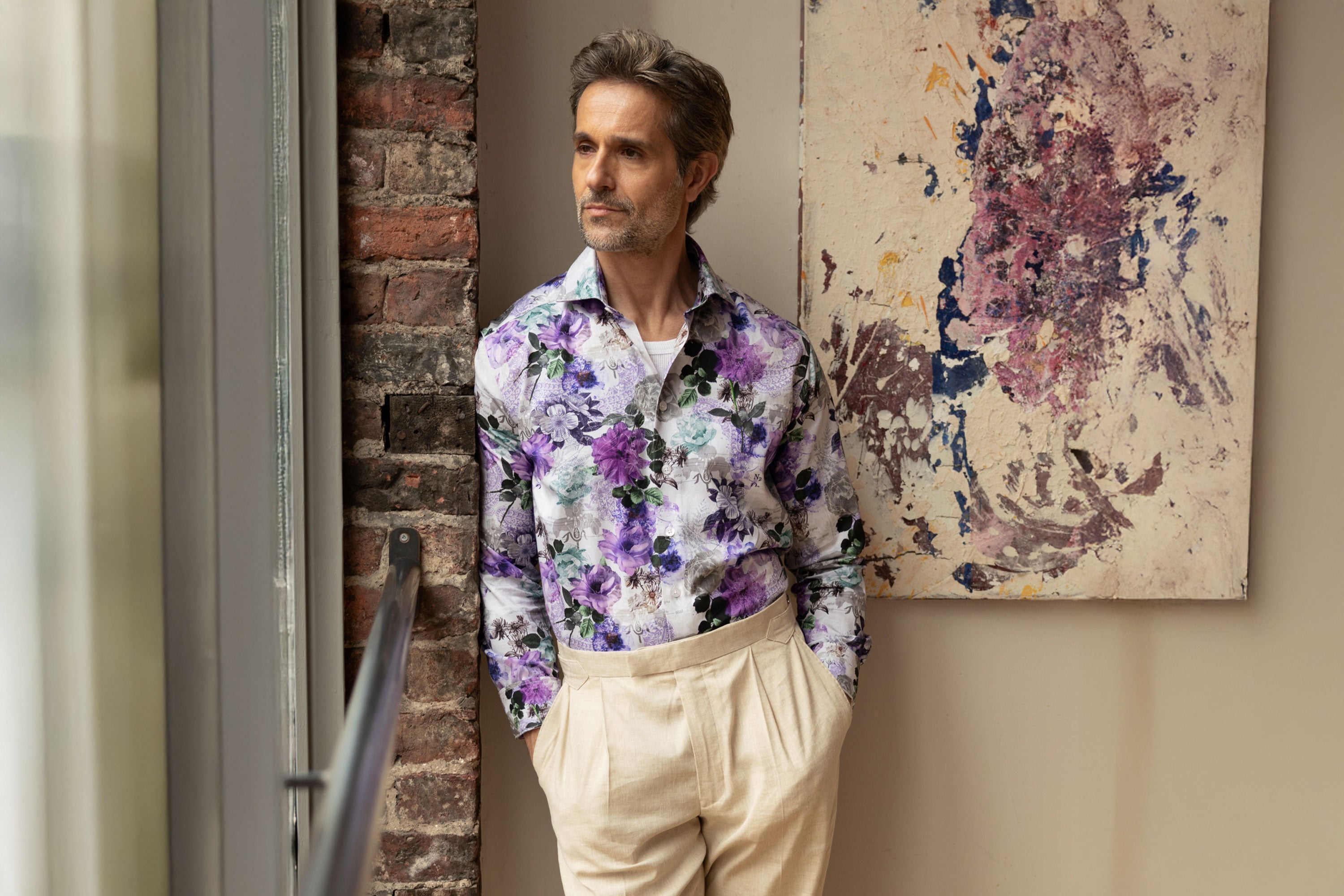
If you like your clothes to make a point, the collar should not be an afterthought. Strong prints, artist-led details and unexpected colour work best when the collar has enough structure to frame them. A semi-cutaway gives a statement shirt a refined finish, while a button-down makes it more casual and approachable.
Blake Mill shirts are designed for that balance: considered enough to wear with tailoring, expressive enough to change the mood of a simple outfit. The collar is part of that design language, not just a functional finishing touch.
Try different shapes in the same outfit formula. Wear a point collar with dark trousers and a blazer, then switch to a cutaway or button-down and notice how the entire look changes. The best shirt collar style is the one that feels natural on you, sharp in the setting and unmistakably yours.