Guide to Shirt Styling: Men’s Looks That Stand Out
A shirt is rarely just a shirt. It sets the energy of an outfit before anyone notices your shoes, watch or weekend plans. This guide to shirt styling for men is about making that first impression feel intentional: sharper than a basic tee, more personal than a predictable overshirt, and never overworked.
The right styling does not mean piling on trends. It means choosing a shirt with presence, then giving it enough room to do its job. A bold print can carry simple trousers. A crisp Oxford can bring order to relaxed tailoring. The strongest looks have one clear idea.
Start With the Shirt’s Fit
Fit is the foundation, whether you favour a graphic print or a clean plain shirt. The shoulder seam should sit where your shoulder ends, not halfway down your arm. The collar should close comfortably with room for a finger, while the body should follow your shape without pulling across the chest or billowing at the waist.
Sleeve length matters more than most men think. Long sleeves should finish around the wrist bone, leaving enough cuff to look considered beneath a jacket. Short sleeves should sit around mid-bicep. Too long and the shirt can feel loose and dated; too tight and it loses its easy confidence.
Do not assume slim is automatically better. A slightly more relaxed cut can look excellent with straight-leg trousers or smart shorts, especially when the fabric has structure. The test is movement: you should be able to reach, sit and layer without constantly adjusting the shirt.
Know When to Tuck It In
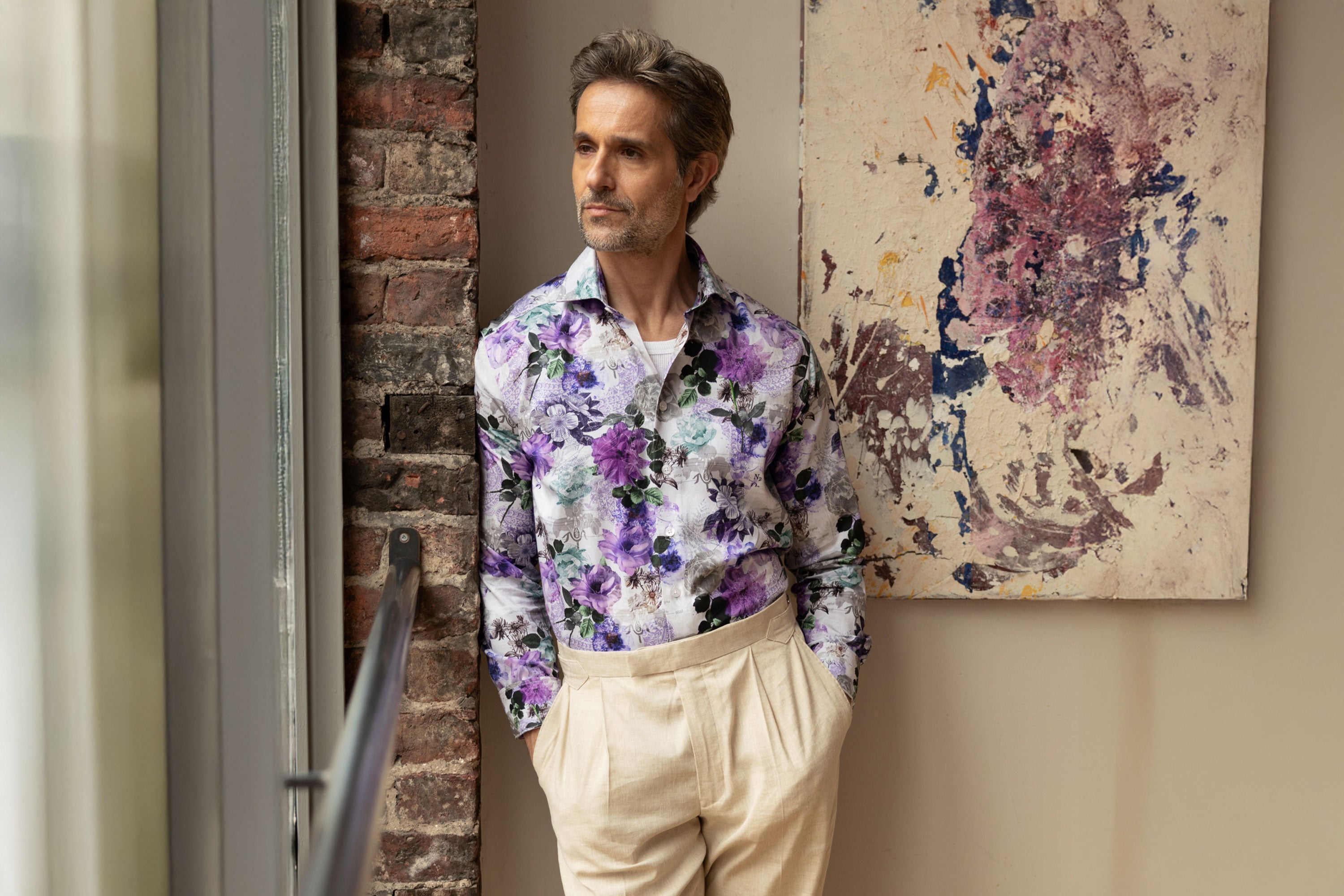
Tucking in is not a rule. It is a styling choice that changes the whole proportion of an outfit. A tucked shirt works naturally with tailored trousers, pleated chinos and a belt, creating a cleaner line through the body. It is especially useful when a printed shirt has a busy design, as the structure keeps the look polished.
Wear it untucked for a more relaxed setting, but watch the length. The hem should generally finish around the middle of the trouser fly. If it falls well below that point, it may look more like an oversized layer than a shirt chosen to be seen. For an easy middle ground, try a partial tuck only when the shirt is lightweight and the occasion is genuinely casual.
Guide to Shirt Styling for Men: Build Around One Statement
A statement shirt does not need statement everything. That is the difference between looking distinctive and looking dressed for a costume party. If the shirt features geometric artwork, rich colour or an expressive print, keep the surrounding pieces clean: navy chinos, black jeans, off-white trousers or dark denim are reliable foundations.
Let the colours in the print guide the rest of the look. You do not need an exact match. Pick out one quieter shade from the design, then echo it in your trousers, trainers or knitwear. A navy detail in the shirt can sit neatly with navy trousers. A warm neutral print can work with stone chinos. This creates connection without turning the outfit into a colour chart.
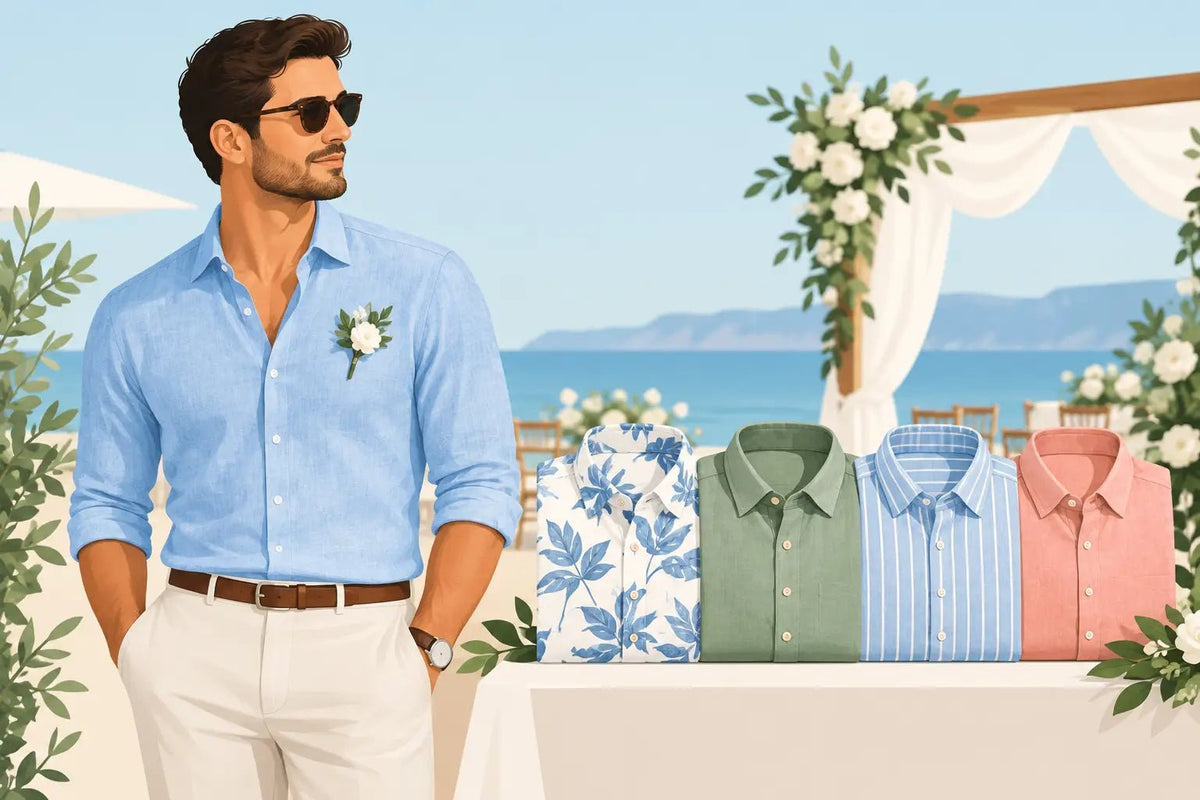
For plain shirts, you can afford more texture elsewhere. A white or pale blue Oxford with textured trousers, suede footwear and a light knit has depth without shouting. A black shirt with charcoal tailoring feels modern and confident, but works best when the fabrics have contrast. Matte cotton against smoother wool is more interesting than an outfit where every surface looks identical.
Match the Shirt to the Occasion
The same shirt can take you from a relaxed lunch to a late booking, but the trouser, footwear and layers decide where it lands.
Smart-casual work and social plans
For offices without a strict suit policy, begin with a long-sleeve shirt and tailored chinos or wool-blend trousers. A refined print brings personality to a meeting room without making the outfit feel informal. Keep the cut neat, tuck the shirt in, and finish with loafers, clean leather trainers or minimal derby shoes.
If your workplace leans conservative, choose a shirt with a smaller-scale pattern or a plain base with an unexpected detail. The aim is to look like yourself, not like you have borrowed a dress code from someone else.
Dinner, dates and evenings out
Evening styling rewards contrast. Pair a dark printed shirt with black jeans and leather boots for a look that is direct without being loud. Alternatively, wear a vivid shirt under a dark blazer, allowing only the collar and front panel to bring colour into the outfit.
Avoid making every item slim and sharp at once. If the shirt is fitted, try a straighter trouser. If you are wearing a relaxed camp-collar style, bring in structure through tailored trousers. A little tension between relaxed and refined makes the outfit feel current.
Weekends and holidays
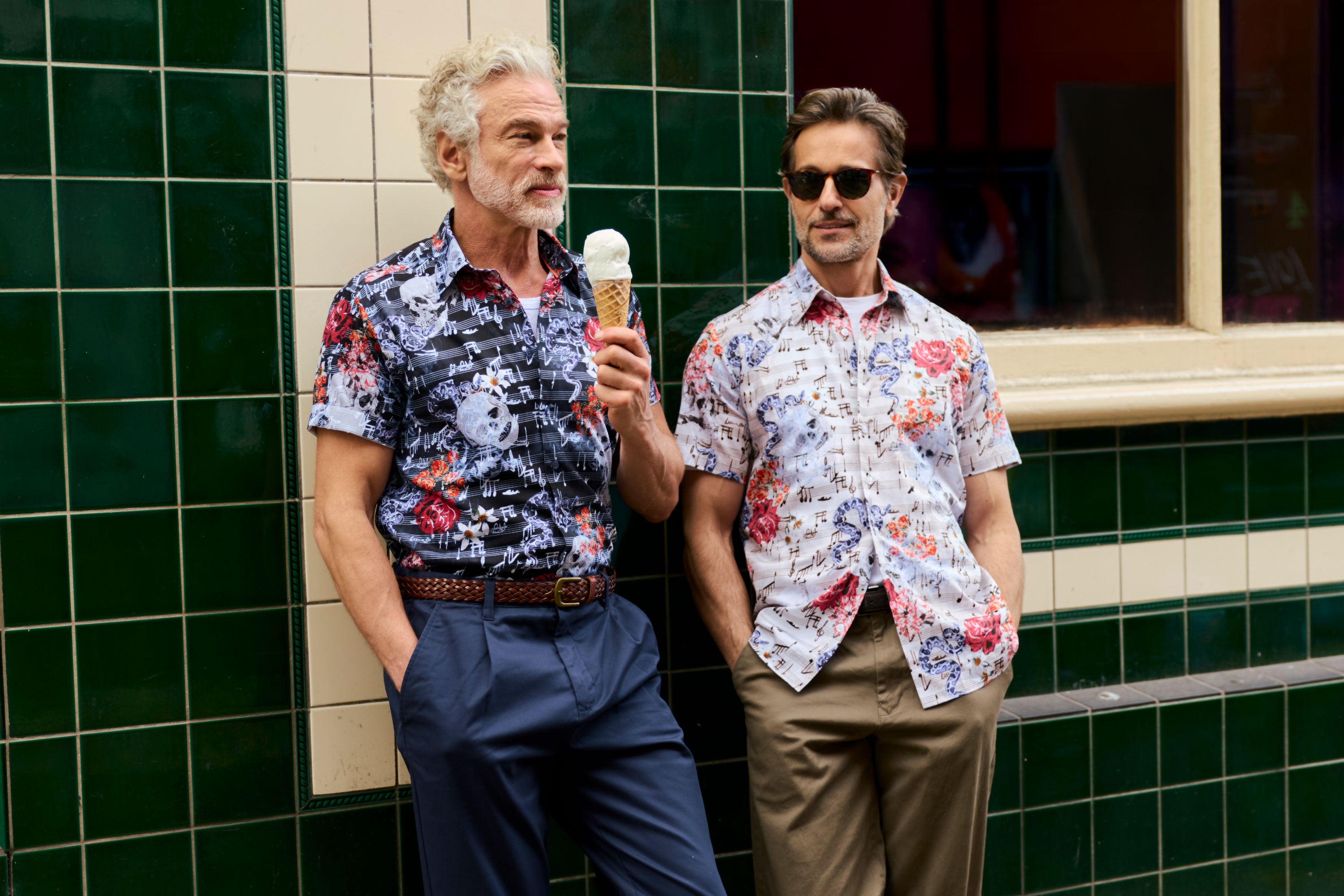
Short-sleeve shirts are built for this territory, but they deserve better than defaulting to faded shorts and flip-flops. Wear a printed short-sleeve shirt with tailored shorts, canvas trainers or leather sandals, depending on the setting. Keep the shirt open over a plain vest only when the fabric is light and the weather calls for it. Buttoned up, it will usually look cleaner.
On holiday, brighter colour is easier to wear because the setting does some of the work. Still, balance matters. If the shirt has a bold tropical or abstract print, choose shorts in a solid neutral. If the shirt is plain, introduce colour through the shorts, sunglasses or a lightweight overshirt.
Layer Without Hiding the Best Bit
A good shirt should not disappear under its layers. The simplest approach is to use outerwear as a frame. An unstructured blazer adds polish while leaving the collar and print visible. A lightweight overshirt can work over a plain shirt, but is less effective over a strong design unless the overshirt stays open and understated.
In cooler weather, a fine-gauge crew neck works well over a collared shirt. Keep the knit neutral and let the collar sit naturally rather than forcing it flat. A quarter-zip offers a sportier alternative, particularly over an Oxford shirt, though it can make a highly decorative print feel crowded.
Jackets require a little judgement. Denim pairs easily with simple shirts, especially white, chambray and restrained stripes. A leather jacket gives printed shirts an edge, but choose one with a clean shape and minimal hardware. For smarter plans, a dark blazer is the most reliable partner because it brings discipline to colour and pattern.
Get Pattern, Colour and Texture Right
You can mix patterns, but only when there is a clear hierarchy. Let one pattern lead and make the other quieter, smaller or further apart. A graphic shirt with a subtly textured blazer can work. A loud shirt with a loud check jacket usually asks too much of the eye.
Scale is your best tool. Large prints tend to feel more relaxed and expressive. Fine prints read smarter from a distance and can work well under tailoring. Vertical stripes can lengthen the torso, while broad horizontal details draw attention across the chest. Neither is universally better. Choose the effect that suits the outfit and your own build.
Colour has a similar role. Deep navy, forest green, burgundy and black are easy entry points for men who want more character without maximum brightness. Cobalt, orange, pink and vivid yellow make a stronger statement, especially in a well-designed print where the colour has context. Wear them with quieter foundations and they will look deliberate rather than daring for the sake of it.
Finish the Look Properly
Shoes can either sharpen a shirt outfit or pull it apart. White leather trainers are useful with chinos, dark denim and short-sleeve shirts, provided they are genuinely clean. Loafers elevate an open-collar shirt and tailored trousers. Boots add weight to darker prints and heavier fabrics. Keep the choice in proportion to the shirt: refined footwear for a refined fabric, more substantial footwear for denim, corduroy or winter layers.
Accessories should support rather than compete. A watch, simple ring, sunglasses or a belt in good leather is usually enough. If the shirt already has a story in its print, let it be the piece people remember.
Blake Mill shirts are designed for men who would rather be recognised for personal style than blend into a row of interchangeable basics. Wear yours with conviction, but give it a clean supporting cast. The most memorable shirt styling is not about being the loudest person in the room. It is about looking entirely comfortable being yourself in it.