Smart Casual Menswear That Actually Works
Smart casual menswear usually goes wrong in one of two ways. It becomes too safe, which leaves you looking like every other man in the room, or it tips too formal and starts feeling like office wear in disguise. The sweet spot sits in the middle - polished, relaxed and clearly intentional.
That is exactly why smart casual remains one of the most useful dress codes in a modern wardrobe. It covers dinners, dates, creative offices, gallery visits, weekend events and the sort of social plans where a T-shirt feels lazy but a suit feels excessive. Done well, it gives you room to show some personality while still looking put together.
What smart casual menswear really means
Smart casual is less about fixed rules and more about balance. You are mixing tailored or refined pieces with more relaxed ones, but everything still needs to feel considered. Think structure without stiffness, comfort without carelessness.
A blazer with dark trousers works. So does a sharp printed shirt with clean chinos. Fine knitwear under a tailored jacket works too. What does not work is treating smart casual as a vague excuse to wear whatever happens to be clean. If one piece is relaxed, another should bring polish. If one item is bold, the rest should support it.
This is also where fit matters more than formality. A well-cut polo with proper trousers often looks smarter than an ill-fitting shirt and jacket. Smart casual is not about piling on "smart" pieces. It is about wearing the right ones, in the right proportions.
The foundation of a strong smart casual wardrobe
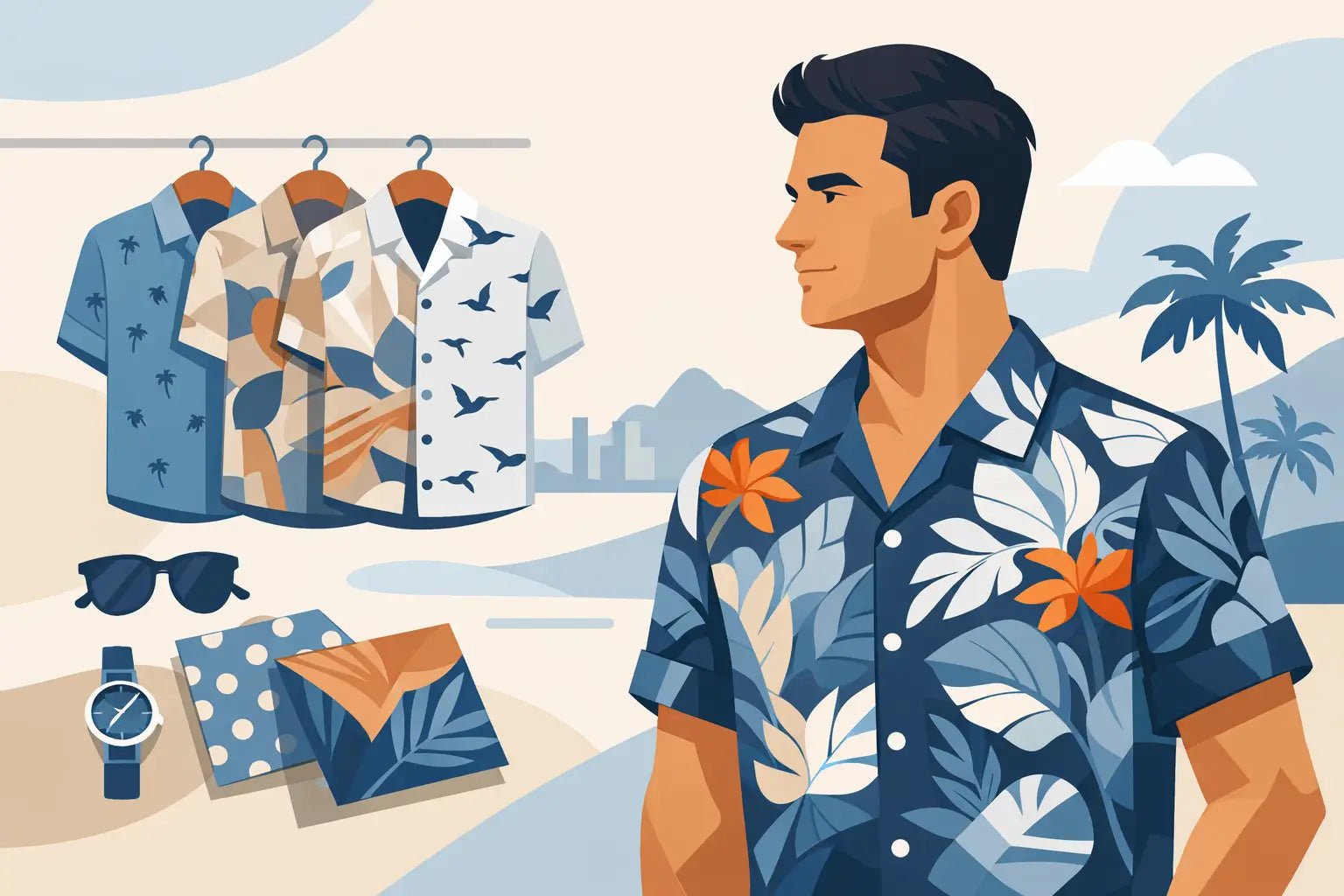
The easiest way to build smart casual menswear is to start with pieces that already carry themselves well. Shirts sit at the centre of that. A crisp Oxford shirt gives you reliability. A printed shirt brings character. A short sleeve shirt can work brilliantly in warmer months, provided the fit is sharp and the fabric has quality.
Trousers should stay clean and structured. Chinos are the obvious choice because they bridge formal and casual naturally, but not all chinos are equal. A neater taper and a solid fabric make a major difference. Dark trousers can sharpen the look further, especially when you want something that leans evening rather than daytime.
On top, knitwear and lightweight outer layers help fine-tune the outfit. A merino crew neck, an unstructured blazer or a refined overshirt can all sit comfortably in smart casual territory. The key is avoiding anything too bulky, too sporty or overly technical. Smart casual benefits from texture and shape, but it should still look clean.
Footwear finishes the job. Leather loafers, premium trainers, suede boots and polished derby shoes can all work depending on the setting. The common thread is condition. If your shoes look tired, the whole outfit drops with them.
Why shirts matter more than most men think
If there is one item that defines smart casual menswear, it is the shirt. Not because every outfit requires one, but because the shirt does more than almost any other piece to set the tone.
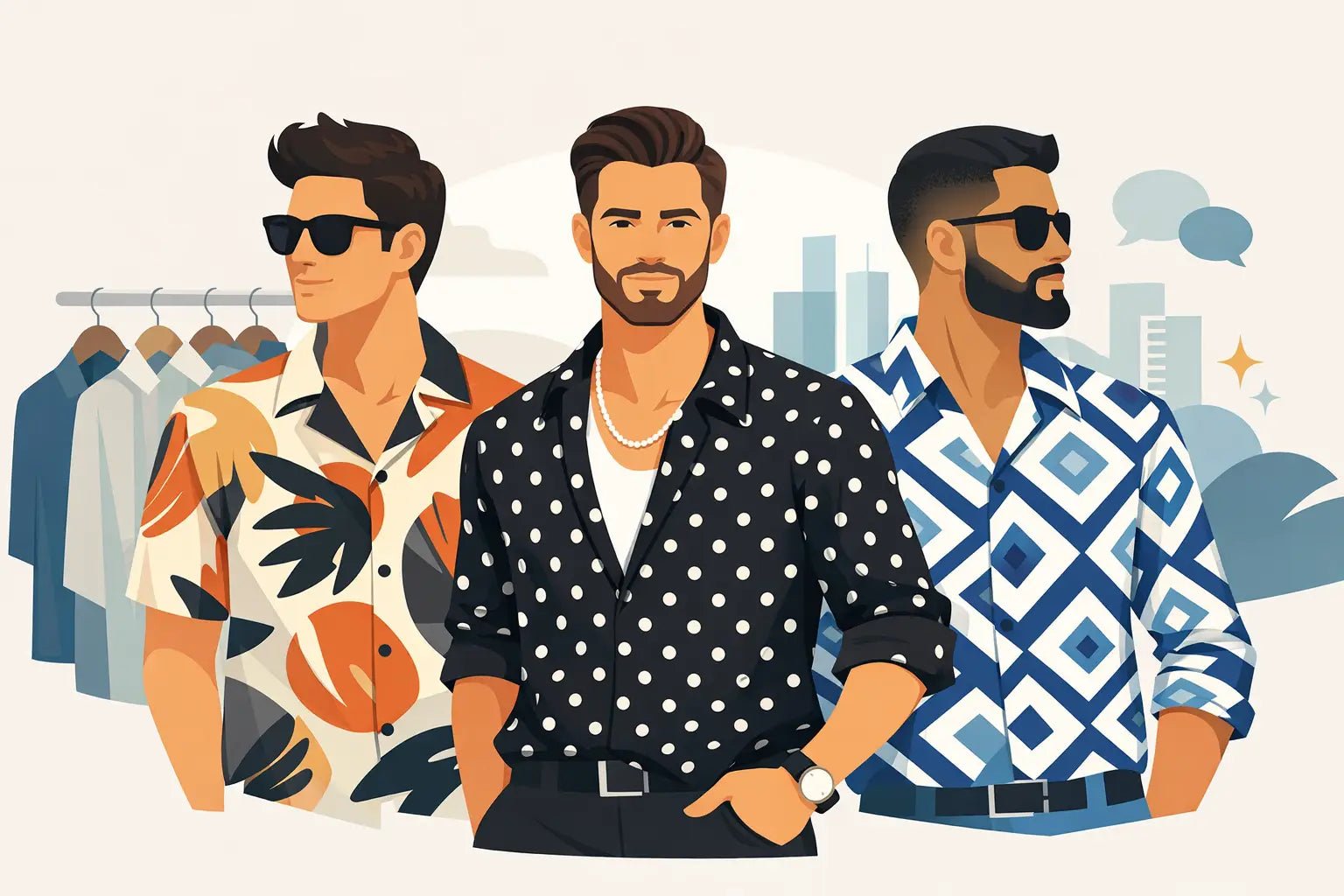
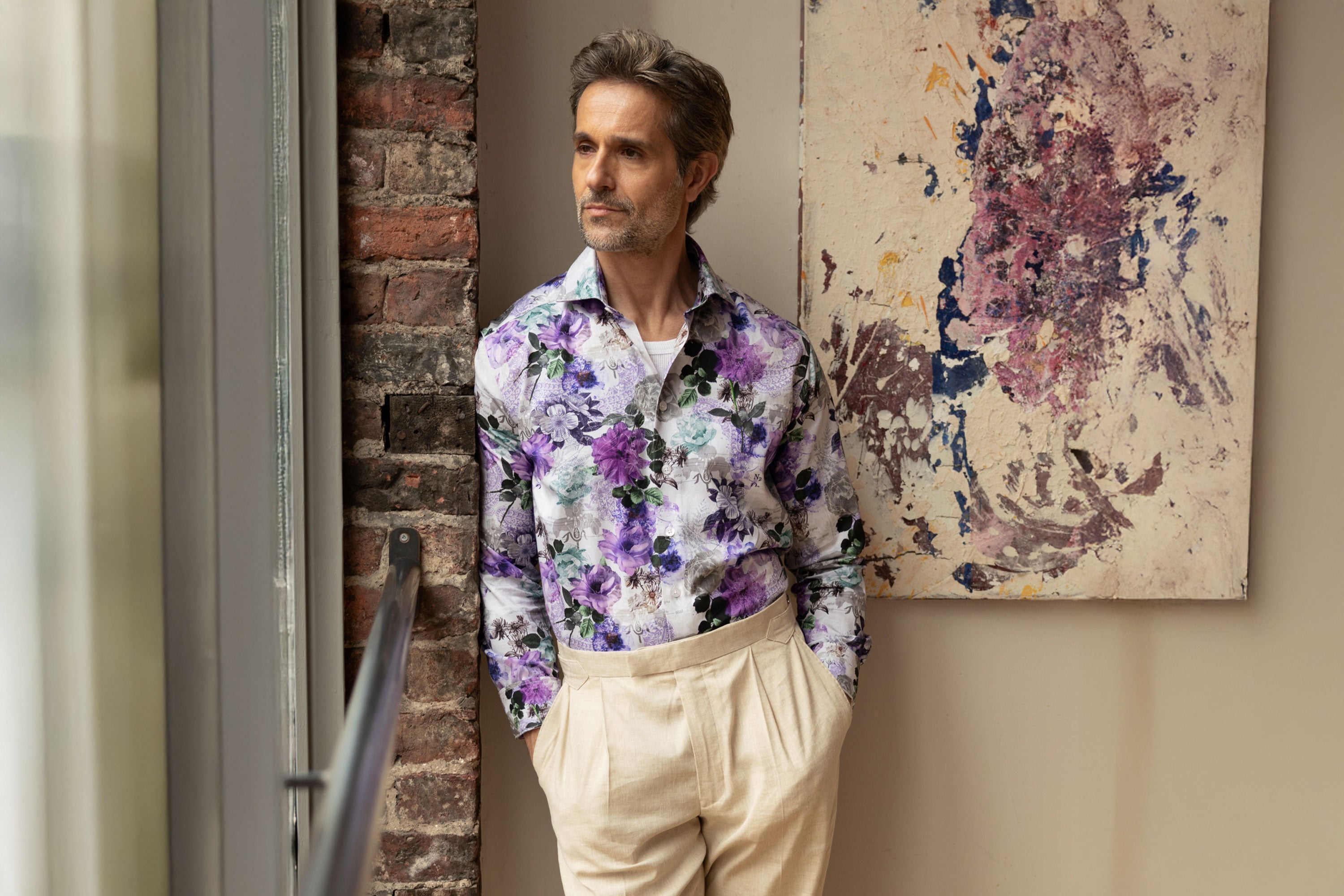
A plain shirt in a strong fit gives you an easy route into smart casual. It is dependable and versatile, especially when paired with tailored trousers or layered under knitwear. But there is also a strong case for using the shirt as the focal point. A distinctive print, geometric pattern or richer colour palette can elevate a simple outfit instantly.
That matters because smart casual should not erase personality. Too many men treat it as a uniform of navy layers and cautious neutrals. There is nothing wrong with restraint, but there is also no reason to disappear into it. A statement shirt worn with clean trousers and understated shoes can strike the right balance between confidence and control.
This is where design-led menswear earns its place. A shirt with character saves you from overcomplicating the rest of the outfit. It does the talking, while everything around it stays sharp and edited.
Getting the balance right
The easiest test for smart casual is to look at your outfit and ask one question: what is doing the relaxing, and what is doing the refining?
If you are wearing trainers, make sure the trousers and shirt feel elevated. If you are choosing a bolder printed shirt, keep the cut neat and the layers minimal. If you are going for knitwear and chinos, a smarter shoe can stop the look from drifting into weekend-only territory.
This balance changes with context. A Friday in a creative office gives you more room for texture, print and premium trainers. A dinner reservation at a smart restaurant might call for darker tones, a collar and better shoes. A summer event can handle short sleeves and lighter fabrics, but it still needs structure somewhere, usually through the trouser or shoe.
That is the real strength of smart casual. It adapts. You are not dressing to a rigid formula. You are reading the room, then choosing pieces that feel appropriate without looking predictable.
Common mistakes that flatten the look
The first mistake is confusing casual with sloppy. Hoodies, running trainers, distressed denim and creased fabrics rarely belong in a smart casual outfit. They may be comfortable, but they do not create the right finish.
The second is overcorrecting into formality. A stiff business shirt, heavy suit jacket and office shoes can make smart casual feel forced. You want ease in the outfit, not boardroom energy.
The third is playing it too safe. Generic basics often produce a perfectly acceptable look, but not a memorable one. If your wardrobe is full of interchangeable pieces, smart casual quickly becomes bland. One considered detail - a striking shirt, a textured blazer, a richer shade - can change the entire impression.
Finally, there is fit. Even premium pieces lose impact when they pull, sag or swamp the frame. Smart casual should look effortless, but that effect usually comes from precision. Clean shoulders, the right sleeve length and trousers that break properly all matter.
Smart casual menswear for different settings
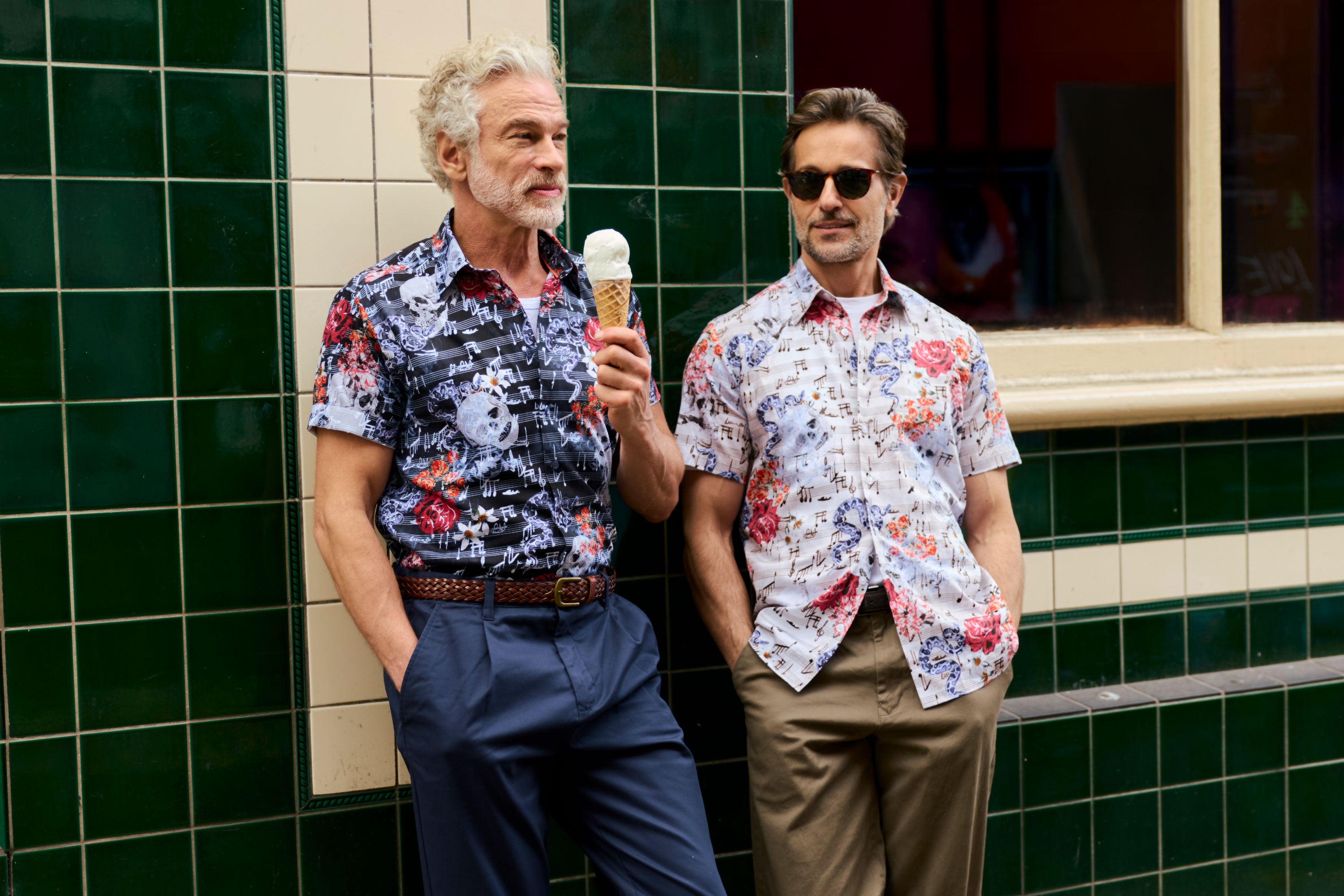
For daytime social plans, keep things easy but polished. A printed shirt, chinos and suede loafers feel sharp without trying too hard. If the print is doing the work, the rest of the outfit can stay simple.
For evenings, darker tones usually help. A black or navy shirt, tailored trousers and a refined jacket create more presence. If you prefer colour or pattern, use it with confidence but keep the silhouette clean.
For work, it depends on the office. In more traditional environments, an Oxford shirt and blazer will always hold their ground. In creative spaces, there is more freedom to bring in bold shirts, elevated polos or lighter layers that show personality without losing polish.
Summer is often where men get caught out. Smart casual in warm weather should never mean resort wear. Short sleeve shirts can absolutely work, especially when the cut is strong and the design has intent. Pair them with tailored trousers or smart chinos and avoid anything too beach-ready.
Personality is the difference
The best smart casual dressers are not the ones following rules most closely. They are the ones who understand how to make the look their own.
That could mean building outfits around one-of-a-kind print designs. It could mean favouring clean monochrome looks with stronger texture. It could mean wearing a bold shirt under a neutral jacket so the outfit feels sharp but not obvious. The point is not to dress louder for the sake of it. The point is to dress with intent.
For men who are tired of anonymous high-street menswear, smart casual offers real space to stand out. It rewards detail. It rewards quality. Most of all, it rewards confidence in your own taste.
Blake Mill sits naturally in that space because bold shirting is often exactly what gives smart casual its edge. When the shirt has originality built in, the rest of the outfit does not need to shout.
How to make smart casual feel easy
The men who look best in smart casual are rarely overthinking every piece. They know which shirts fit properly, which trousers sharpen the silhouette and which shoes finish the look. Once those foundations are in place, getting dressed becomes far simpler.
Start by identifying the pieces in your wardrobe that already feel polished. Then look for the gap. It is often not another safe layer or another plain knit. It is the item that brings some identity into the mix. A shirt with a stronger print. A better cut trouser. A smarter trainer that does not look borrowed from the gym.
Smart casual menswear is at its best when it feels expressive but controlled. You should look ready, not rehearsed. Sharp, not stiff. Distinctive, not overdone.
If an outfit feels like you could walk straight from lunch to dinner to drinks without changing, you are probably getting it right.