Colour Blocking Trends for Men Who Dress Bold
A great outfit does not need more detail. It needs the right detail. That is why colour blocking trends have returned with real purpose: clean panels of colour create impact quickly, giving straightforward pieces the confidence of a statement look. For men who find head-to-toe neutral a little too safe, colour blocking offers a more considered way to stand out.
This is not about throwing on every bright shade in the wardrobe. The strongest looks rely on contrast, proportion and a clear point of view. Think a saturated overshirt against a crisp tee, a dark trouser grounding a vivid knit, or a statement shirt doing the hard work beneath an otherwise simple outfit. Bold, yes. Busy, never.
What Is Driving Colour Blocking Trends Now?
Colour blocking has always had a place in menswear, from sport-inspired jackets to graphic knitwear. The current version feels more polished. Rather than loud logos and random panels, the focus is on confident combinations, richer tones and clothes with a more grown-up shape.
That shift matters. A colour-blocked look can feel creative without becoming costume-like when the fit is sharp and the palette is deliberate. Deep forest green with cream, cobalt with navy, burgundy with rust, and black with a clean hit of white all have presence without looking like they were chosen in the dark.
The wider move towards expressive dressing is part of it too. Men are building wardrobes with more personality, particularly for dinners, weekends away, creative workplaces and occasions where a plain blue shirt feels like the easy option. Colour blocking makes a statement before you have said a word, but it can still look composed.
The New Rules of Colour Blocking for Men
The old formula was simple: pair two bold, contrasting colours and hope for the best. The better approach is to treat colour as part of the outfit's structure. One shade leads, another supports, and a neutral gives everything room to breathe.
Start with the balance. If the top half is bright or patterned, choose a trouser that is quieter and more grounded. Navy, charcoal, stone and black are useful anchors, but they are not the only answer. Olive, tobacco and dark brown can bring warmth while keeping the look wearable.
Then consider intensity. High-energy colours such as orange, bright blue and red work brilliantly together in small, defined areas, but they can compete if every piece is equally saturated. Pair one vivid tone with a softened alternative: burnt orange with ecru, teal with navy, or a rich pink with chocolate brown. The contrast remains, while the outfit feels far more intentional.
Fit is the final filter. Relaxed silhouettes suit colour blocking because they let blocks of colour sit naturally across the body, especially in overshirts, knitwear and short-sleeve shirts. A badly fitting item, however, can make even the best palette feel awkward. Keep shoulders clean, sleeves purposeful and trouser lengths tidy.
Choose a Focal Point
Every strong outfit has one piece that gets the first look. With colour blocking, that could be a boldly patterned shirt, a knit in an unexpected shade or a jacket with a sharp contrast panel. Let that piece lead and avoid surrounding it with rivals.
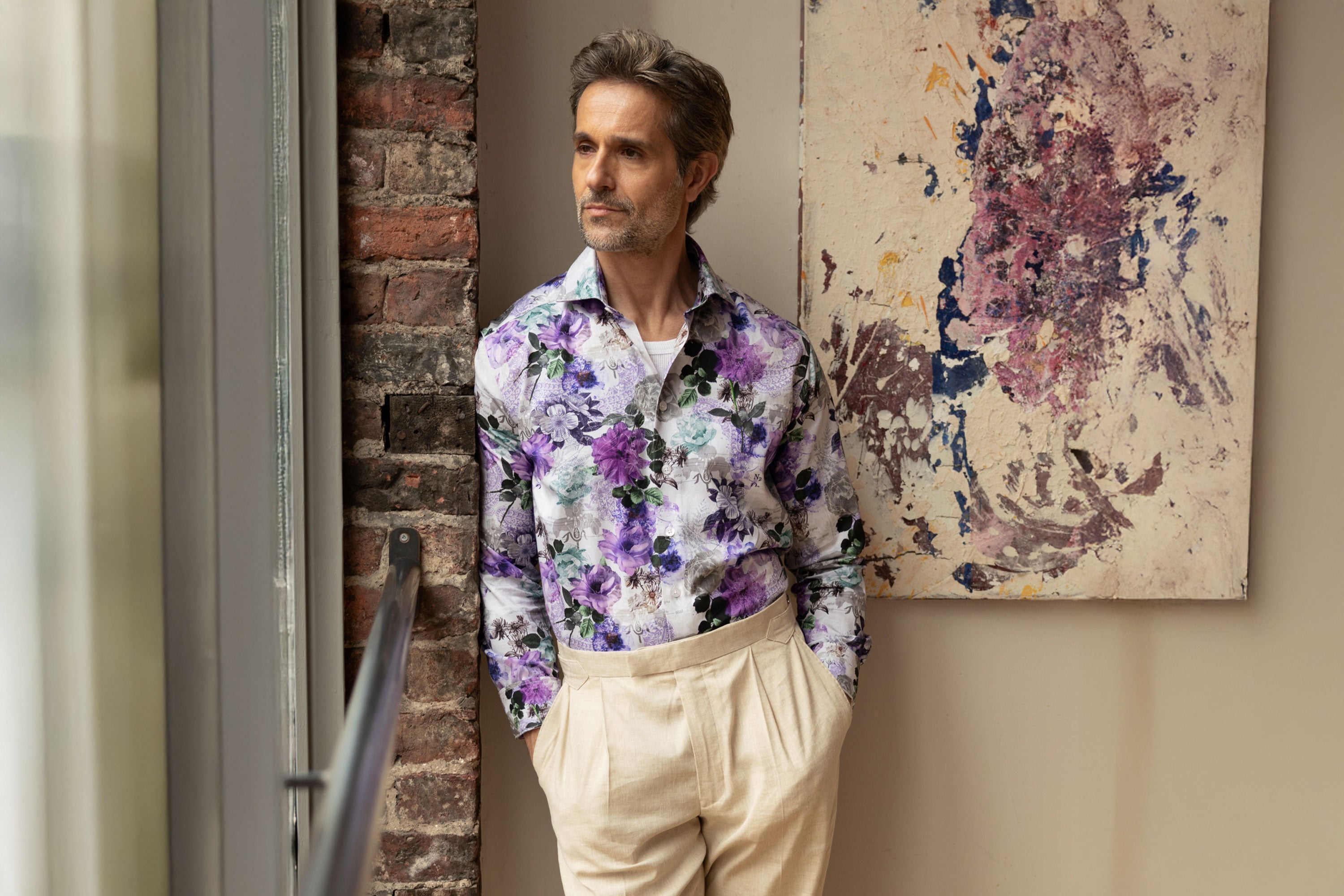
A printed shirt is especially useful here because it does more than introduce colour. It brings pattern, texture and personality into the outfit, allowing you to pick out one shade and repeat it elsewhere. A blue and green geo print, for example, sits neatly with navy trousers and clean white trainers. The colours connect, but the result does not feel overly matched.
Let Neutrals Earn Their Place
Neutral does not mean forgettable. In a colour-blocked outfit, it is often the reason the bolder pieces work. White, cream, navy, grey, black and earthy brown create space around a strong colour, making it look sharper rather than louder.
This is particularly useful if bright clothing is new territory. Try a coloured shirt with dark denim, or a vivid polo beneath a navy overshirt. You still get the visual hit, but the rest of the outfit keeps it grounded. It is a low-risk move with high-impact results.
Colour Combinations Worth Wearing
Some pairings are reliable because they offer contrast without clashing. Blue and green remains a standout, especially when one is dark and the other has more clarity. Navy and cobalt work for a clean, modern finish, while petrol blue and olive feel more understated.
Burgundy and pink also deserve more attention. The key is depth: a dark wine tone alongside dusty pink feels refined, whereas bright red and candy pink can move quickly into novelty territory. For evenings, burgundy with black is hard to beat. It has drama without the need for excessive styling.
If you prefer warmer colours, try rust with navy or mustard with charcoal. Both combinations feel confident and work well through autumn and winter. In spring and summer, look to cream with sky blue, pale green with white, or coral with deep navy. The lighter neutral gives the colour a fresher, more relaxed feel.
Black and white still have their place, but the best versions bring in a third note. A black-and-white shirt with olive trousers, for instance, has more character than a strictly monochrome outfit. This is where expressive design earns its keep: a carefully placed accent colour makes familiar combinations feel less expected.
How to Wear the Trend Without Looking Overdone
Colour blocking works best when you wear it with conviction, not caution disguised as chaos. Start with two colours and one neutral. That formula offers enough contrast to look deliberate, while keeping the outfit easy to wear from day to night.
For a smart-casual setting, try a bold long-sleeve shirt with tailored navy trousers and minimal trainers or loafers. Keep the shirt as the main event. If it has a strong print, choose a trouser colour that appears within the design rather than introducing an entirely new shade.
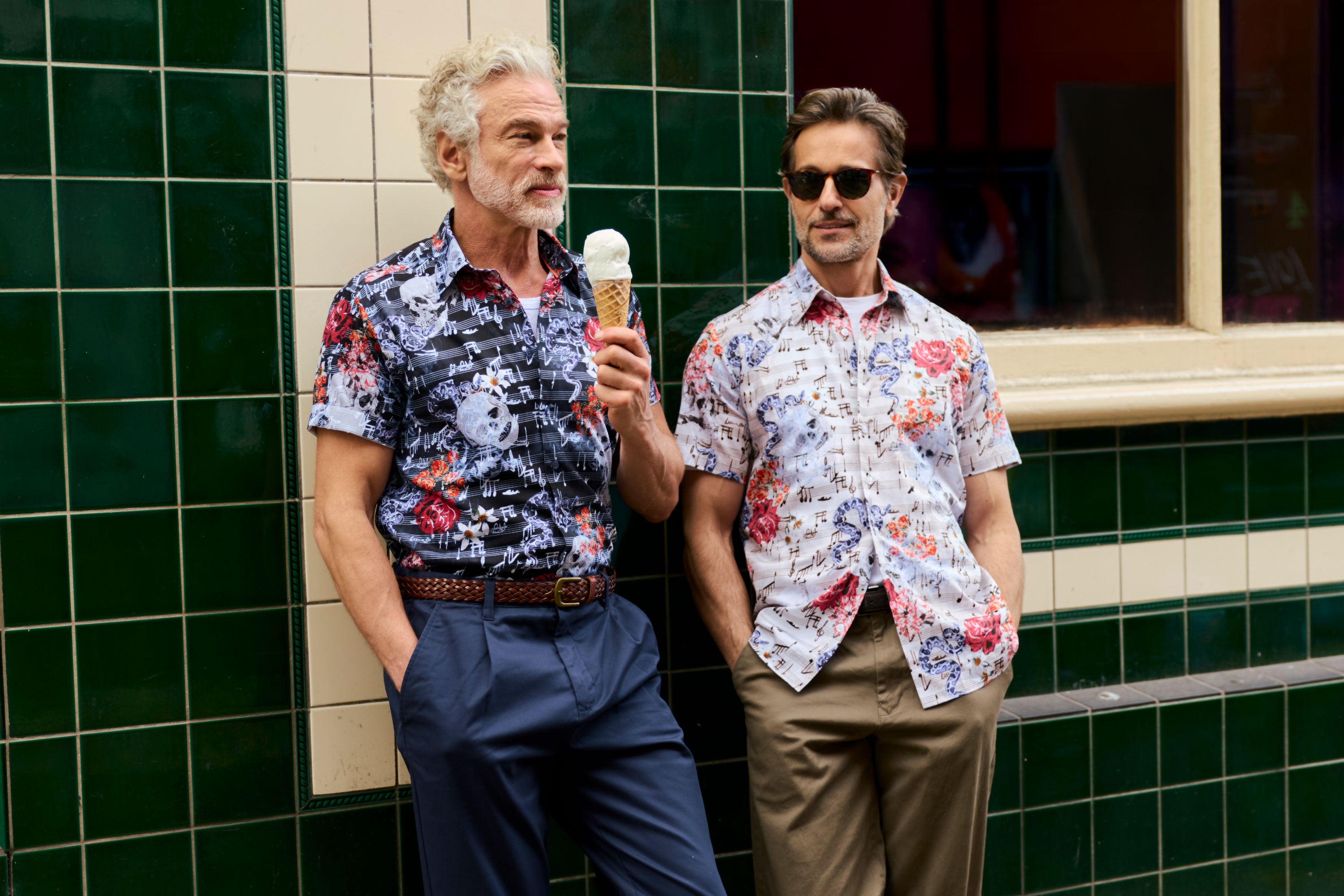
For weekends, a short-sleeve shirt layered over a plain tee gives you an easy way to experiment. Choose the tee in a shade that either matches the shirt's lightest colour or acts as a clean break, usually white or cream. Add relaxed trousers or well-cut shorts, and let the colours do their job.
For work, it depends on the dress code. In a traditional office, colour blocking is strongest in smaller moves: a coloured Oxford shirt with a contrasting knit, or a patterned shirt under a navy blazer. In a more creative setting, there is room for a bolder shirt-and-trouser combination. The difference is restraint. One statement is personal style. Three competing statements can look like a dress rehearsal.
Accessories Should Support, Not Compete
When colour takes centre stage, accessories need to be selective. White trainers, dark leather shoes, a simple belt and a considered watch are usually enough. If you add colour through footwear, repeat a shade already present in the outfit rather than creating another visual argument.
Texture can also do some of the work. A knitted polo, brushed overshirt or crisp cotton shirt adds depth without adding another colour. This is useful when your palette is deliberately minimal, such as cream, navy and green. The outfit remains interesting up close, even if the colours are controlled.
The Common Mistakes
The most common mistake is treating colour blocking as a challenge to wear the brightest possible version of everything. The aim is contrast, not competition. Avoid combining multiple primary colours at equal strength unless the setting genuinely calls for a fashion-forward look.
Another is ignoring where colour sits on the body. A lighter or brighter top naturally draws the eye upwards, which is usually flattering and keeps the outfit focused. Strong colour through trousers can work, but balance it with a quieter top and simple footwear.
Finally, do not force a trend that fights your own style. If saturated colour is not for you, work with richer dark shades instead. Bottle green, plum, rust and ink blue still create clear blocks of contrast, but with a quieter kind of confidence.
Make It Personal
The best colour blocking trends are not rules to copy exactly. They are an invitation to make more decisive choices. A bold shirt, a clean trouser and one excellent colour combination can take an everyday outfit far beyond the standard high-street uniform.
Blake Mill is built for that approach: design-led shirts that give you a focal point, then leave room for your own styling. Start with a colour you already wear well, pair it with a strong neutral, and build from there. The most convincing outfit is not the loudest one. It is the one that looks entirely like you.