A Guide to Oxford Shirt Outfits That Stand Out
An Oxford shirt is not a background piece unless you wear it like one. This guide to Oxford shirt outfits is for men who want the crisp structure of classic shirting without falling into the usual uniform of pale blue, dark jeans and predictable trainers. The cloth is dependable. The styling is where personality shows up.
Oxford fabric has texture, weight and a relaxed confidence that makes it more versatile than a formal poplin shirt. It can sharpen up a casual look, take the edge off tailoring and provide a clean frame for stronger colour and print. Get the fit right, then give it a point of view.
Start with fit, not formality
An Oxford shirt should sit close enough to look intentional, but never so tight that the textured cloth pulls across the chest or shoulders. The shoulder seam should finish at your natural shoulder, while the body needs enough room to move comfortably when tucked in or worn open over a T-shirt.
Sleeves should end around the base of the thumb when unbuttoned. If you regularly roll them, avoid an overly slim sleeve - a stiff, crowded roll makes an otherwise relaxed shirt look forced. A button-down collar is a natural match for Oxford cloth: it holds its shape, looks considered under a knit and remains neat when worn open.
The choice between tucked and untucked depends on the shirt length and the trousers. A shorter, straighter hem works untucked with jeans, chinos or tailored shorts. A longer hem is made to tuck in. Do not split the difference with a shirt that hangs halfway down the thigh - that is less relaxed, not more.
Oxford shirt outfits for off-duty days
The easiest Oxford shirt outfit begins with dark indigo jeans and leather trainers or suede desert boots. Choose a white, sky blue, navy or soft green shirt, leave the top button open and keep the rest clean. It is a reliable weekend combination, but it does not have to be bland. A richer trouser colour - olive, tobacco or ecru - instantly gives the shirt more character.
For a sharper casual look, wear an Oxford shirt over a plain, heavyweight T-shirt. Leave it unbuttoned and treat it as a light overshirt. The T-shirt should be fitted enough to avoid excess bulk, while the shirt needs a slightly roomier cut. White trainers keep the look fresh; suede loafers make it feel more grown-up.
In warmer weather, pair a pale Oxford shirt with tailored shorts and loafers, canvas trainers or clean leather sandals. Roll the sleeves once or twice rather than pushing them roughly to the elbow. The point is ease, not beachwear. Skip heavy denim and overly sporty footwear if you want the shirt to retain its polished edge.
Colour does much of the work here. White and pale blue are the obvious choices, but dusty pink, olive, deep teal and washed navy offer more impact without turning an everyday outfit into fancy dress. If your shirt has a distinctive weave, stripe or subtle design detail, keep the rest of the palette controlled and let it lead.
A guide to Oxford shirt outfits with tailoring
Oxford shirts are softer and more textured than dress shirts, which is exactly why they work so well with relaxed tailoring. Think unstructured blazers, drawstring trousers with a proper crease, lightweight wool suits and textured overshirts. The contrast keeps the outfit smart without looking as though you have dressed for a boardroom that no longer exists.
A white Oxford shirt, navy unstructured blazer and grey tailored trousers is a strong starting point. Swap traditional business shoes for dark brown loafers, polished derby shoes or minimal leather trainers depending on the setting. For a dinner, exhibition opening or smart social event, this formula feels confident without defaulting to a tie.
A darker Oxford shirt can work beautifully with tailoring too, especially in navy, charcoal or bottle green. Pair it with stone, beige or mid-grey trousers to prevent the look becoming too heavy. Dark shirt, dark suit and black shoes can be effective for evening, but it needs contrast in texture or tone. Otherwise, it risks looking flat.
When should you tuck it in? With trousers that have pleats, a higher rise or a defined waistband, tuck it. It creates shape and makes the trousers look purposeful. With a soft jacket and slim, low-rise jeans, leaving the shirt untucked can make more sense. The aim is balance, not obedience to a rule.
Layer texture, not clutter
Oxford cloth earns its keep between seasons. Under a merino crew neck, it gives you a neat collar and a touch of texture at the cuff. Choose knitwear with enough space through the neck so the collar sits naturally rather than bunching up. Grey, navy, chocolate and forest green knits all make easy partners for white and blue shirts.
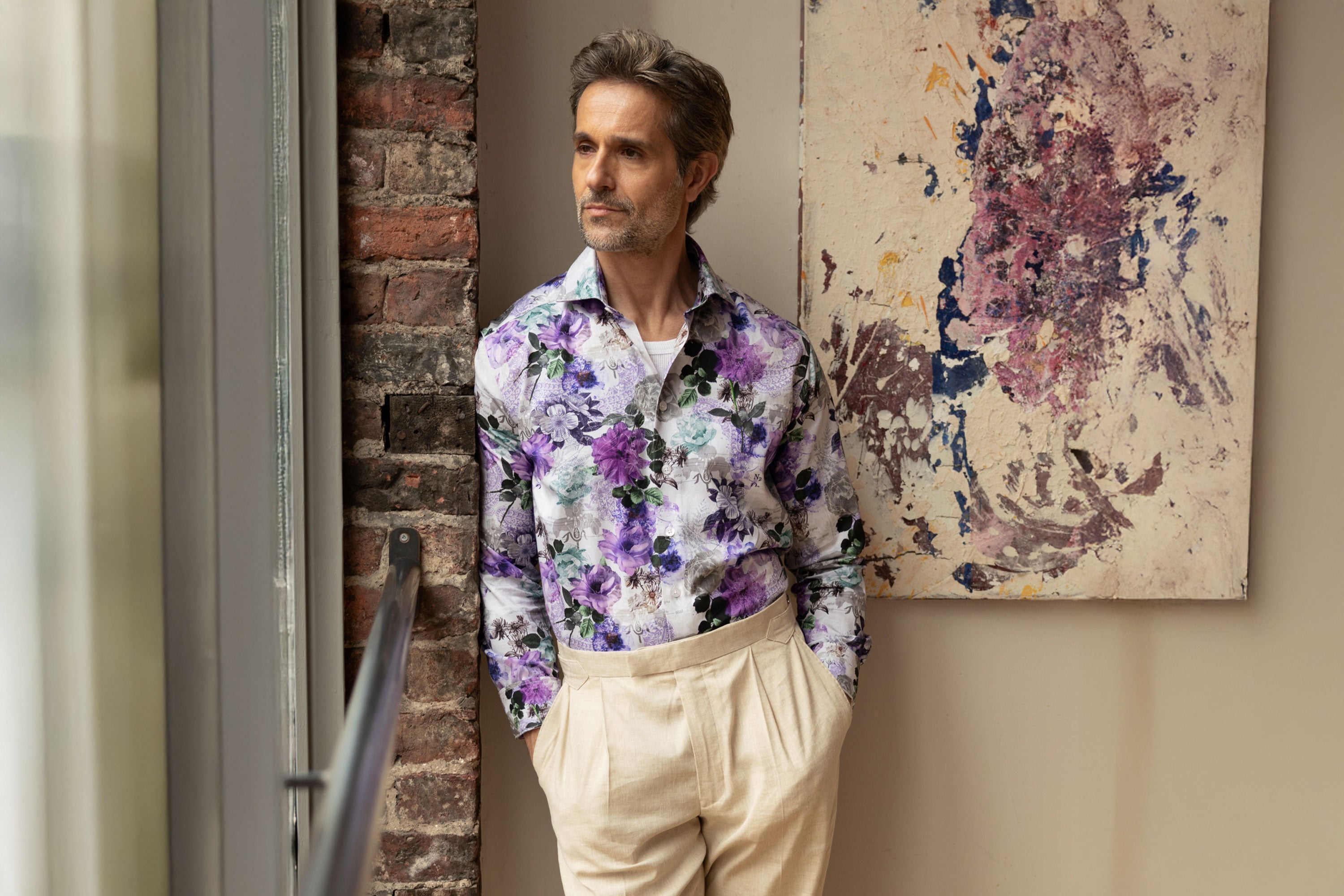
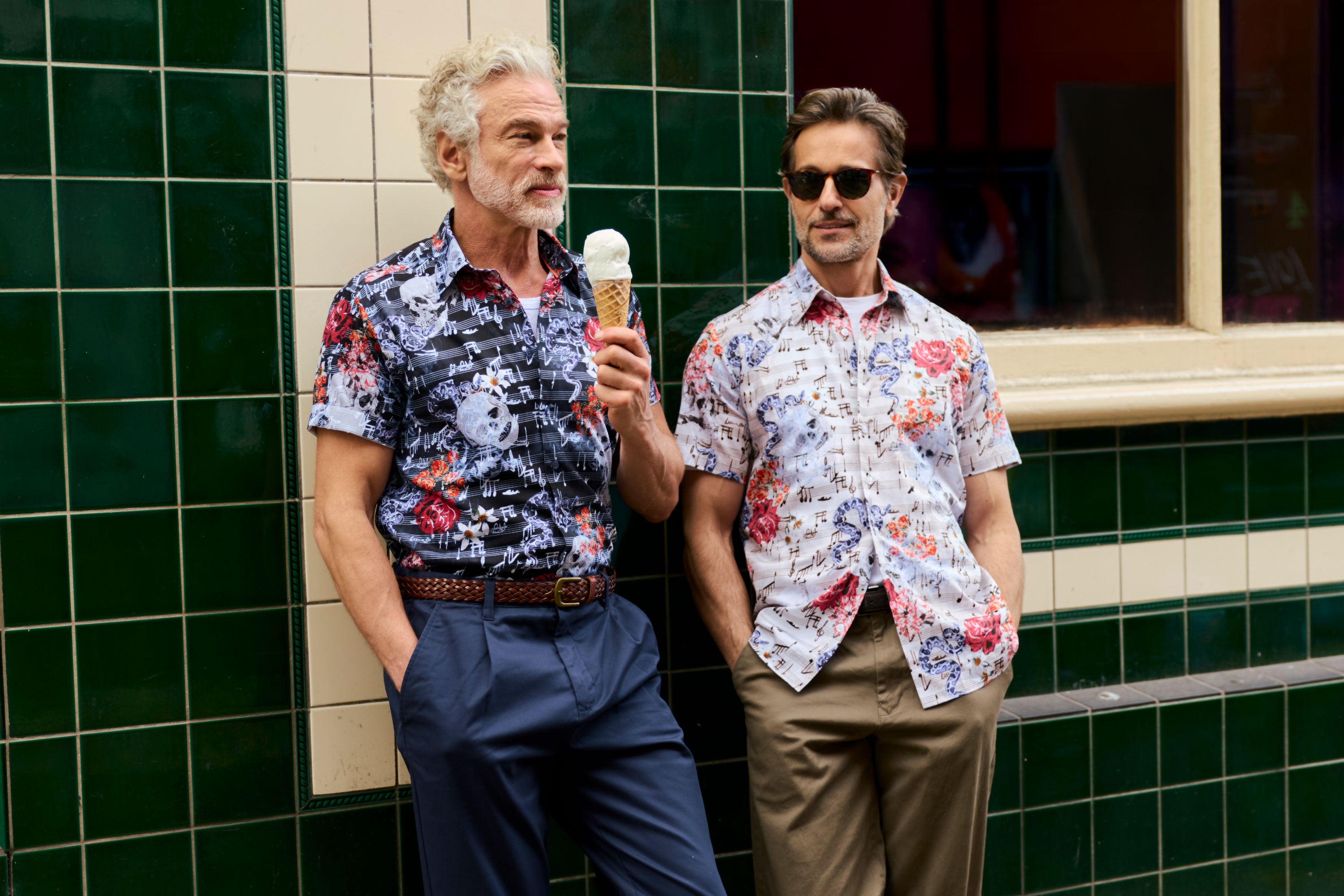
For more visual energy, wear one beneath a chore jacket, suede bomber or wool overshirt. This is where a confident shirt can bring something different to the outfit. A bold geometric lining, contrast trim or expressive print on an outer layer can sit comfortably beside a plain Oxford, provided one piece takes the lead. Blake Mill’s approach to distinctive shirts is built on that same principle: personality works best when the outfit gives it room.
Avoid layering an Oxford shirt with too many competing details. A patterned shirt, checked blazer, statement knit and colourful trainers may all be good pieces individually, but together they fight for attention. Build around one focal point, then use texture to add depth - brushed cotton, wool, suede and denim are usually enough.
Choose footwear that matches the mood
Footwear decides whether an Oxford shirt feels collegiate, contemporary or properly smart. White leather trainers make the shirt more casual and work best with cropped chinos, dark denim and relaxed tailoring. Keep them clean. Scuffed trainers pull the whole outfit down because Oxford cloth naturally looks considered.
Suede desert boots bring warmth and are ideal with indigo jeans, olive chinos and corduroy trousers. Loafers are the strongest choice when you want the shirt to look more polished without becoming formal. Brown suede loafers are particularly useful: less severe than black leather, but smarter than trainers.
For colder months, try chunky-soled derby shoes or refined lace-up boots with heavier Oxford shirts and wool trousers. The trade-off is proportion. A substantial shoe needs trousers with enough weight and width to hold its own. Slim, clingy jeans paired with oversized boots tend to look unbalanced.
Make classic colours feel less predictable
A pale blue Oxford shirt will always earn its place, but it should not be the only answer. White offers the clearest contrast beneath dark outerwear. Navy feels modern with lighter trousers. Sage and olive work brilliantly with cream denim, brown suede and charcoal tailoring. Pink looks especially good against mid-wash denim or navy chinos when the shade is muted rather than sugary.
If you prefer a bolder wardrobe, use the Oxford shirt as the calm piece that grounds it. Wear it with patterned trousers in restrained tones, a printed jacket, or a standout pair of trainers. Alternatively, choose an Oxford with a subtle stripe or unexpected colour and make it the feature against plain trousers. Either route works. Wearing statement pieces head to toe rarely does.
Accessories should finish the look, not announce themselves first. A quality belt, textured socks, a watch with a simple face or a clean cap can be enough. When the shirt is tucked in, match the belt to the formality of the shoe. When it is untucked, do not worry about showing the belt at all - focus on the line of the outfit.
Let the occasion set the rules
For a casual pub lunch, an untucked Oxford, straight-leg jeans and trainers is hard to beat. For a date, switch to tailored trousers and loafers. For a creative workplace, add an unstructured blazer or overshirt. For a wedding with a relaxed dress code, a fresh white or pale blue Oxford with a lightweight suit can look far more current than a stiff formal shirt.
The Oxford shirt works because it adapts, but it should still look chosen. Press it lightly, keep the collar clean and let the fabric’s texture do the talking. The best outfits do not make a basic shirt disappear - they make a familiar piece feel entirely your own.