How to Wear Statement Shirts With Confidence
A statement shirt should do exactly that: say something. It might be a vivid geometric print, an unexpected colour combination or artwork that turns a simple outfit into a talking point. Knowing how to wear statement shirts is not about muting them down until they disappear. It is about giving a strong piece the right setting, so it looks intentional from first coffee to last orders.
The best bold shirts have presence, but they do not need a complicated outfit around them. Start with a shirt that feels like you, then build the rest with confidence and a little restraint.
Start with one clear focal point
A printed shirt is the focal point. Treat it that way. Once the shirt is on, everything else should either support its colour palette, sharpen its shape or make it work for the occasion.
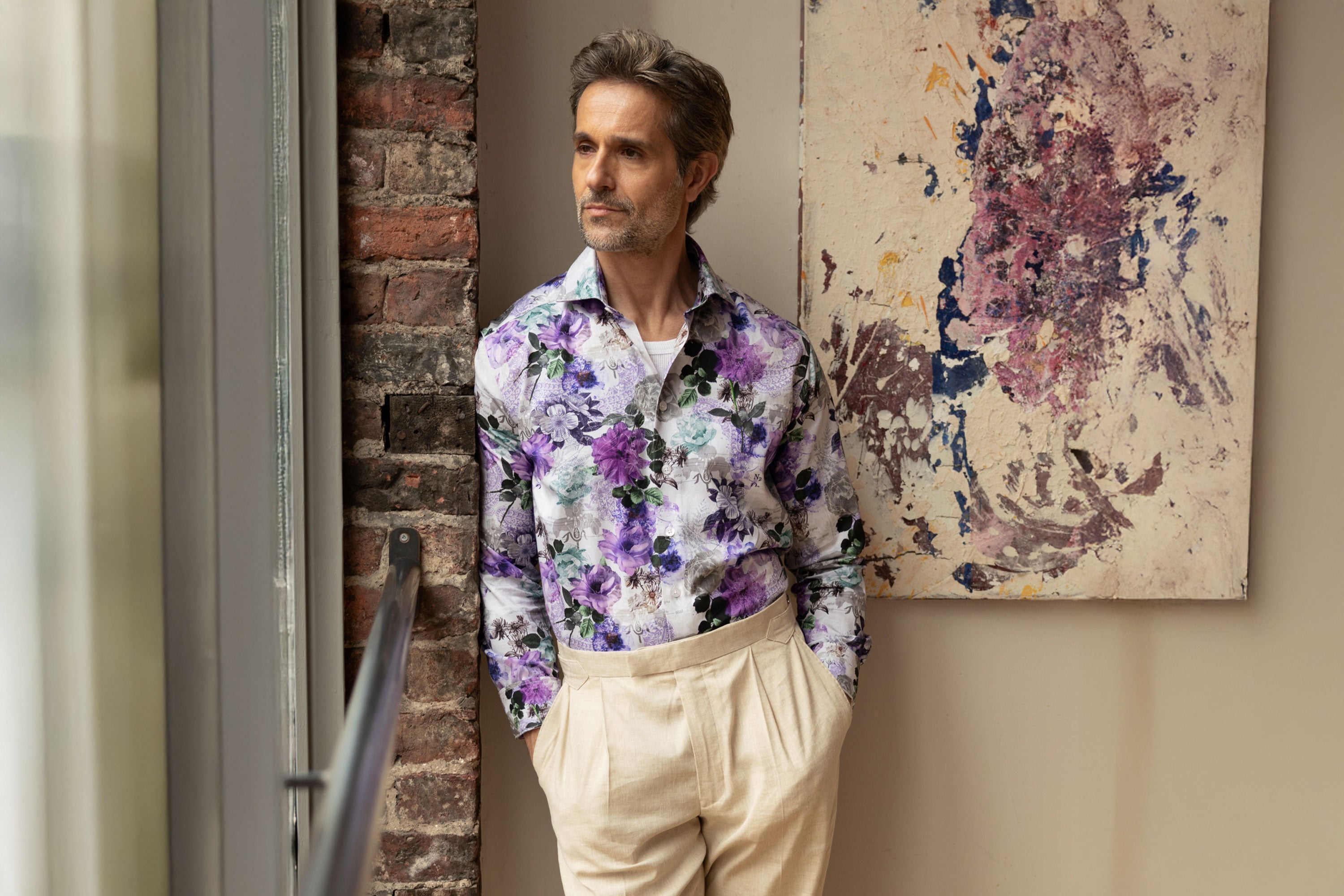
This does not mean every other item has to be black. Navy, ecru, stone, olive and deep brown all give a bold print room to breathe. Pull one quieter shade from the shirt and repeat it in your trousers, overshirt or footwear. That creates a considered look without looking over-styled.
The trade-off is simple: the louder the print, the cleaner the rest of the outfit should be. A shirt with high-contrast artwork or multiple colours looks strongest with plain trousers and minimal trainers. A subtler geo print can carry more texture around it, such as suede loafers, an unstructured blazer or dark denim.
Choose the right fit before the print
Even the best design loses impact if the fit is off. A statement shirt should sit neatly at the shoulder, skim rather than cling through the chest, and fall cleanly over the waistband. Too tight and the print can feel forced. Too loose and the shape can become untidy, particularly when worn untucked.
For most smart-casual settings, a tailored but comfortable fit is the sweet spot. It keeps the shirt polished enough for dinner, a date or a creative workplace, while still feeling relaxed. If you prefer an overshirt-style look, size and proportion matter even more. Wear the shirt open over a plain T-shirt only when there is enough room for both layers to sit comfortably.
Sleeve length deserves attention too. Long sleeves can be buttoned for a sharper finish or rolled with purpose to make the outfit more relaxed. Roll them once or twice to just below the elbow, rather than pushing them up in uneven folds. Short sleeve statement shirts should sit close to the upper arm without gripping it, with a hem that does not drop too far below the hip.
How to wear statement shirts with trousers
The easiest route is a bold shirt with a plain, well-cut trouser. Dark navy chinos, black tailored trousers and ecru denim are reliable foundations because they look deliberate without competing for attention.
For an evening look, pair a dark-base printed shirt with black trousers and leather loafers or clean black boots. Keep the shirt untucked if the hem is designed for it, or tuck it in with a discreet belt when the occasion calls for a more polished silhouette. One move changes the whole mood.
For weekends, try a colourful shirt with relaxed-fit denim in an even wash. Mid-blue jeans work particularly well with shirts that include warm tones, while off-white jeans make brighter blues, greens and graphic black prints feel fresh. Avoid heavily distressed denim here. Rips, bold prints and busy trainers can make the outfit look like several ideas competing at once.
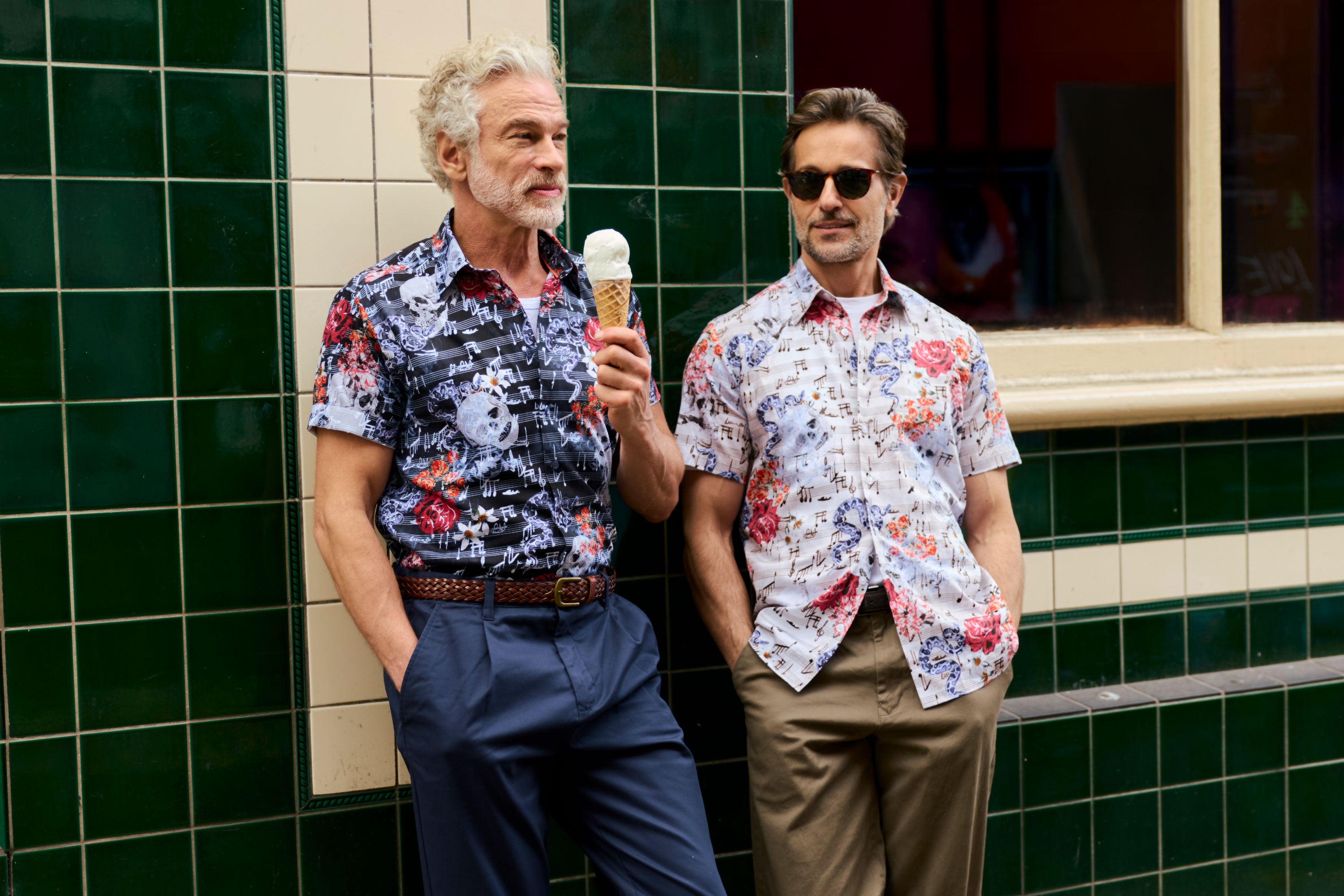
In warmer weather, tailored shorts are a natural match. Choose navy, cream, olive or black, depending on the shirt. The shorts should be clean through the leg and stop above the knee. Add leather sandals for a holiday dinner, loafers for a smarter terrace plan, or low-profile trainers for daytime.
Use layers to change the setting
A statement shirt does not have to be reserved for warm weather or big nights out. The right layer makes it wearable across more of your wardrobe.
Under a navy or charcoal blazer, a printed shirt brings personality to a dinner, gallery opening or less formal work event. Choose a shirt with some darker tones in its print, leave the tie at home and keep the trousers simple. The aim is sharp, not corporate. If the shirt has a wide, colourful print, choose an unstructured blazer with a clean finish rather than anything heavily patterned or shiny.
A plain overshirt, chore jacket or lightweight bomber works well for off-duty styling. Let the collar and a section of the print show through, then keep the outer layer open. This is particularly useful if you want to wear a bolder shirt in a low-key pub, at a casual lunch or while travelling.
Knitwear changes the equation again. A fine-gauge crew neck over a statement shirt allows the collar and cuffs to do the work. Choose a knit in one of the print's background shades, not necessarily its brightest accent colour. A deep navy knit over a shirt with blue, orange and cream detail will look more composed than an orange knit trying to match every note.
Get colour right without playing safe
You do not need to be an expert in colour theory to wear bold shirts well. You only need to recognise which colour is leading and which colours are supporting.
If a shirt is primarily navy with flashes of red, the navy should guide the trousers or jacket. Let the red remain the surprise. If the print is light and bright, such as white with cobalt, green or pink, ground it with darker trousers or neutral stone shades. This stops the look from feeling washed out.
Monochrome prints offer the most flexibility. A black-and-white graphic shirt can work with black jeans and boots for an evening edge, or with light trousers and trainers for a more relaxed contrast. Earthy patterns sit naturally with olive, chocolate, sand and cream. Rich jewel tones, meanwhile, tend to look especially good with navy, charcoal and black.
There is one rule worth keeping: avoid matching every colour exactly. A shirt, trouser and trainer all in the same bright shade can look more costume than style. Echo a colour once, then leave space around it.
Shoes and accessories should finish, not fight
Footwear can decide whether your statement shirt looks casual, refined or ready for a night out. White leather trainers are the dependable choice for daytime, provided they are genuinely clean. Suede loafers bring the outfit up a level without making it stiff. Chelsea boots or sleek lace-up boots give darker prints more edge.
Accessories should be selective. A good watch, a simple ring or understated sunglasses are enough. If the shirt is detailed, skip the oversized logo belt, stacked chains and heavily branded cap. Personal style is not about wearing everything you own at once.
Sunglasses are a useful exception when the weather calls for them. Classic black or tortoiseshell frames tend to work with most prints. Let the shirt provide the colour and let the frames provide the structure.
Dress for the occasion, not the algorithm
A statement shirt can be smart-casual, creative, relaxed or celebratory. It depends on styling, fabric and where you are going.
For a first date, choose a print that feels distinctive but not theatrical, pair it with dark trousers and good shoes, and keep the jacket optional. For a wedding after-party or birthday dinner, go bolder: a more expressive design, tailored black trousers and loafers can carry the room without requiring a full suit. For a casual Friday at work, balance the shirt with an Oxford-style trouser or dark chinos and a clean overshirt nearby if the office runs conservative.
The key is to look like you chose the shirt for the plan, not like you are wearing the same outfit everywhere. A standout piece earns more wear when you adapt the supporting cast.
Wear it like it belongs to you
The final part of wearing a statement shirt is the part no mirror can solve. Do not keep adjusting the collar, apologising for the print or waiting for someone to mention it. A bold shirt is not a costume. It is simply proof that you have chosen something with more character than the usual plain option.
At Blake Mill, the point of a one-of-a-kind print is not to make every outfit louder. It is to make getting dressed more personal. Start with a shirt that catches your eye, give it clean lines and solid foundations, then step out as though it was always the obvious choice.