Why Do Shirts Fade? Keep Colour in Your Rotation
A bold shirt earns its place by doing more than filling a gap in the wardrobe. It brings colour, detail and character to an otherwise ordinary day. So, why do shirts fade when you have barely had the chance to wear them? Usually, it is not one dramatic mistake. It is the combined effect of water, detergent, heat, light and friction gradually lifting or dulling the dye.
The good news is that fading is not inevitable at the same rate for every shirt. Fabric, dye quality, print technique and how you care for it all make a real difference. A little more intention on wash day can keep the colours in your rotation looking considered for far longer.
Why do shirts fade in the wash?
Washing is the biggest cause of colour loss because it puts dye under pressure from several directions at once. Water swells the fibres, detergent loosens dirt and oils, the drum creates friction, and heat can accelerate the whole process. With every cycle, tiny amounts of dye can be released from the fabric. It may be invisible at first, but the cumulative effect is what turns a crisp black into charcoal or makes a rich print look less defined.
The first few washes matter most. Excess dye can come away from newly made garments, particularly with deep shades such as navy, black, burgundy and saturated greens. That does not automatically mean a shirt is poor quality. It is a normal part of settling into wear, though a well-made garment should retain its overall depth and clarity when washed correctly.
Detergent can be too aggressive
Not all detergents treat colour equally. Heavy-duty formulas are designed to tackle stubborn stains and can include bleaching agents, brighteners or enzymes that are more forceful than a lightly worn shirt needs. They are useful when you have mud, grass or a difficult spill to shift, but they can be overkill for a shirt worn to dinner or the office.
Use a detergent intended for colours where possible, and measure it rather than pouring freely. More detergent does not mean a cleaner shirt. If it does not rinse out fully, it can leave residue that makes fabric look flat and feel less soft.
Hot water speeds up colour loss
High temperatures help remove grime, but they can also encourage dye to migrate from fibres. Cotton shirts, especially printed cotton, are usually happier in a cool or 30°C wash. This is gentle enough for regular care while still giving detergent the right conditions to work.
There are exceptions. If a care label calls for a warmer wash, follow it. Hygiene concerns may also justify higher temperatures. But for everyday washing, heat is a trade-off: you may get a more intensive clean, while asking more of the shirt's colour and finish.
Friction makes prints and dark colours look tired
The washing machine does not only clean with water. It also rubs garments against each other, the drum and themselves. That abrasion can roughen the fibre surface, creating a slightly fuzzy appearance that scatters light. Dark shirts then appear paler, while sharp printed details can lose some of their original definition.
Turning shirts inside out is one of the easiest ways to protect the visible side of the fabric. Fasten buttons too, particularly at the collar and cuffs, so they do not snag against other pieces. A gentle cycle reduces mechanical action, and avoiding an overfilled drum gives water room to move without turning the load into a fabric scrum.
Be selective about what goes in together. Heavy denim, towels, garments with zips and rough workwear can be hard on lightweight cotton shirting. A shirt designed to make an entrance should not have to share a wash with a pair of jeans determined to sand it down.
Sunlight fades shirts even when they are not being worn
Sunlight is brilliant for a Saturday afternoon, less so for a coloured shirt left in a bright window. Ultraviolet light breaks down colour molecules over time. This is why a shirt can fade unevenly, with the shoulders, upper back or side facing the window losing depth before the rest of the garment.
Drying outside can be practical, and fresh air has its place, but direct midday sun is harsh on darker colours and vivid prints. Turn shirts inside out and dry them in the shade if you are using a line. Indoors, keep them away from radiators and strong, prolonged sunlight.
Storage matters as well. A shirt kept on display in a sunlit room may be part of the décor, but it is also slowly being exposed to the same light that fades artwork and upholstery. Hang favourites in a wardrobe or cover open rails where daylight is intense.
The fabric and dye method set the starting point
Some shirts hold colour better because of how they are made. Fibre type has a role: cotton takes dye beautifully, but its colour can fade with repeated washing; polyester tends to retain colour well, though it can hold onto odours and needs different care around heat. Blends often balance comfort, appearance and durability, but their behaviour depends on the exact composition.
Print construction matters too. A print may be applied to the surface of the fabric, dyed through the fibre, or created with different inks and finishing methods. There is no single format that wins in every situation. The goal is a shirt with colour that feels intentional, whether it is a clean plain shade, a geometric pattern or a detailed artistic print.
Quality also shows up in the details. Better dyeing and printing processes generally create more consistent colour and stronger resistance to washing and light. Yet even the best shirt needs sensible care. Premium fabric is not permission to wash it hot with towels, tumble dry it at full blast and leave it in direct sun for days.
How to keep shirt colours looking sharp
A considered laundry routine does not need to be complicated. Wash shirts only when they need it, rather than automatically after a brief wear. If you have worn one over an undershirt on a cool evening and it is clean and fresh, air it on a hanger before deciding it needs a full wash. Less washing means less friction and less dye loss.
When it is time to clean it, turn the shirt inside out, close the buttons and wash similar colours together on a short, gentle cycle at 30°C or cooler. Choose colour-care detergent and avoid bleach unless the care label explicitly permits it. Treat a stain directly rather than escalating the entire load to a harsher programme.
Take the shirt out promptly once the cycle ends. Leaving damp clothing bunched in the drum encourages creasing and can allow colours to transfer between garments. Reshape the collar, placket and cuffs while damp, then air dry away from strong heat and direct sun. If you use a tumble dryer, keep the temperature low and remove the shirt while it is still slightly damp to reduce stress on the fibres.
Ironing is another moment for care. High heat can affect some prints and finishes, so check the label and iron inside out where appropriate. Steam is useful for smoothing cotton, but do not linger over printed areas. A clean iron plate matters too, as residue can mark pale sections and leave a dull film behind.
Fading is sometimes part of the character
Not every shift in colour is a failure. Indigo denim, garment-dyed cotton and some casual fabrics are designed to soften and develop variation with wear. That lived-in look can be exactly the point. The difference is whether the fading feels even and intentional, or whether a favourite shirt has simply been worn down by rough laundry habits.
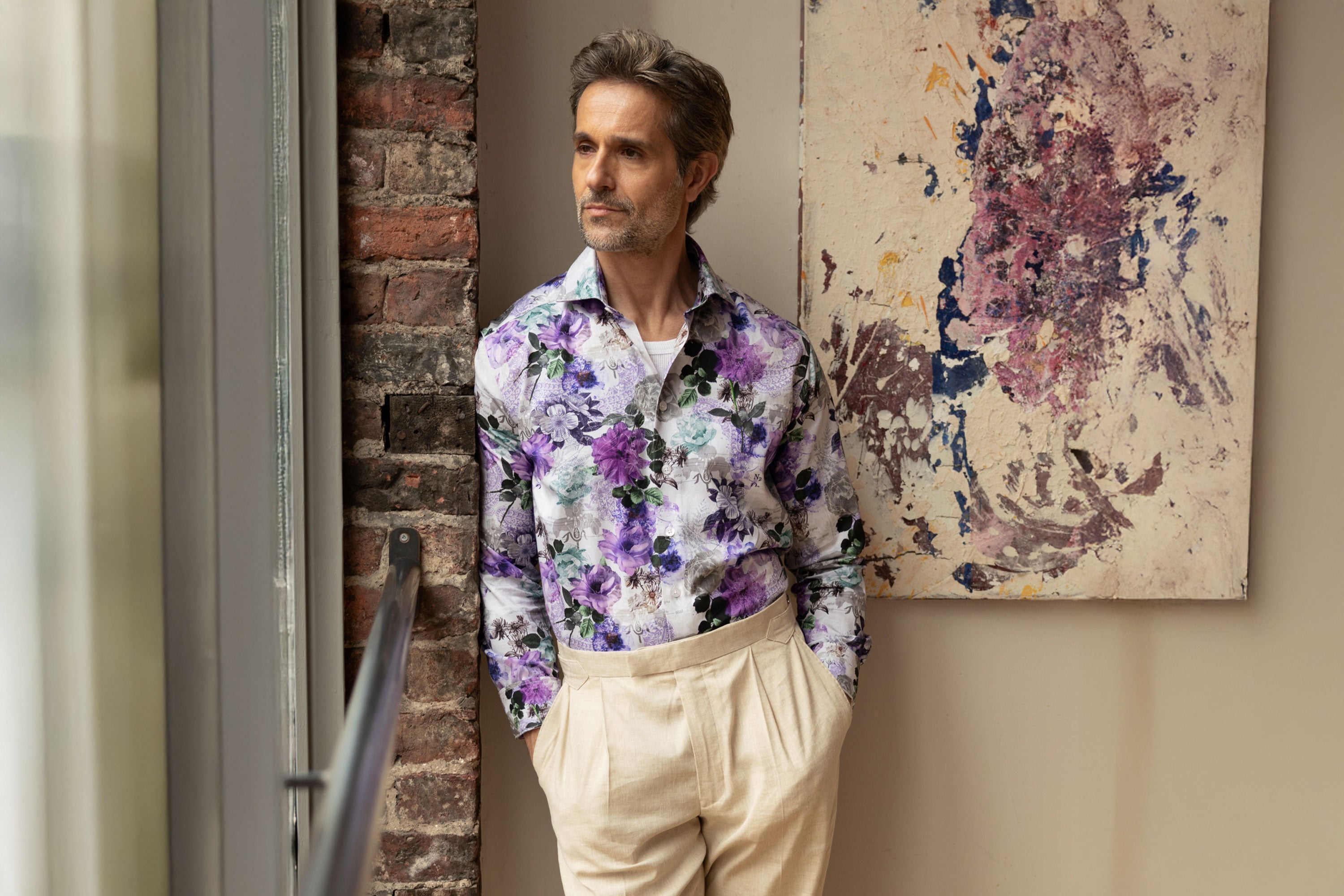
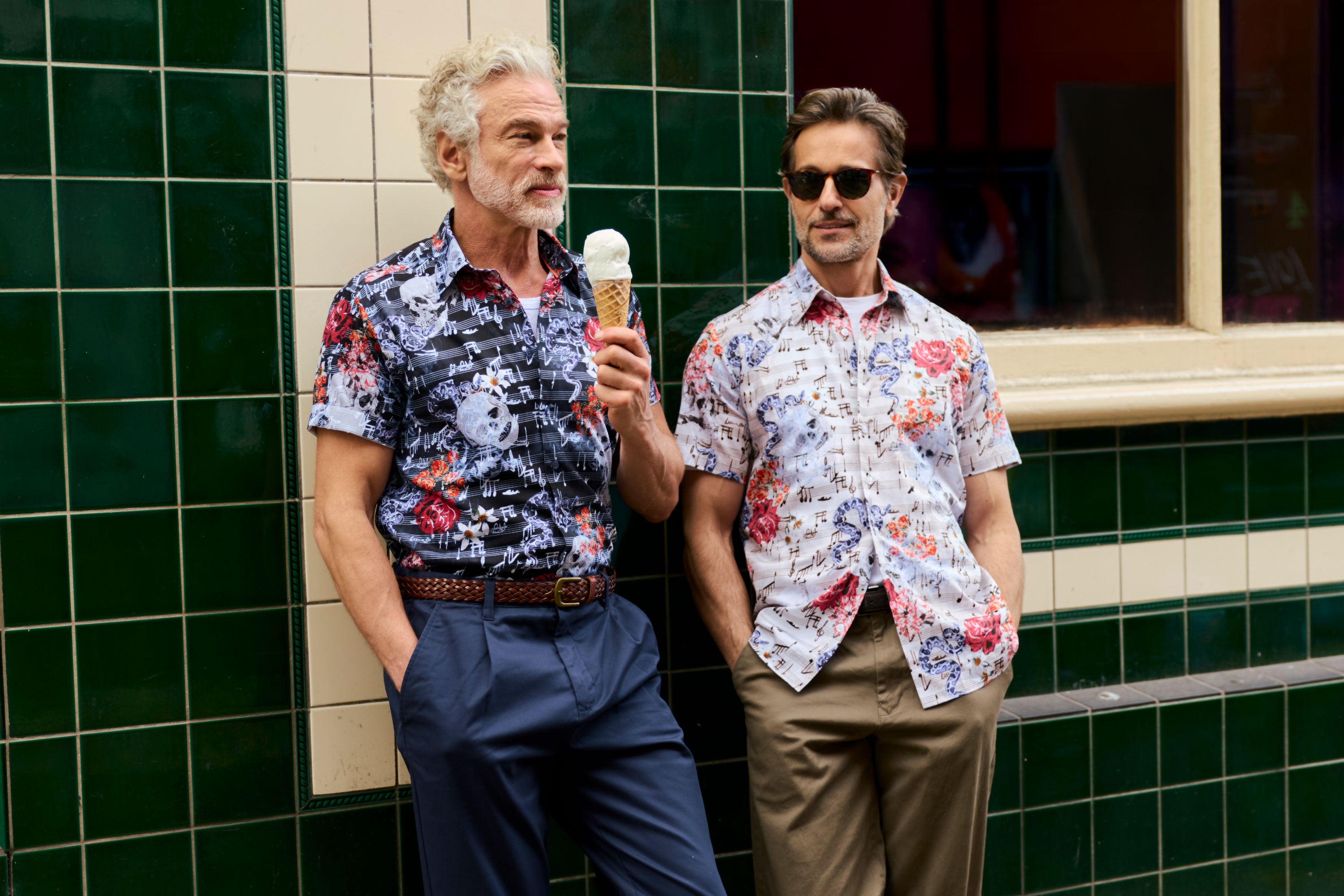
For statement shirting, clarity is usually the aim. You want the print to stay energetic, the dark tones to keep their depth and the fabric to look polished enough for a smart-casual plan. This is especially true of a distinctive Blake Mill shirt, where the design should remain the first thing people notice, not the fact that it has had one too many hot washes.
A shirt with personality deserves more than a default laundry setting. Give it cooler water, gentler handling and a break from direct sun, and it will keep bringing the same confidence to the room long after the first wear.