Best Collar Styles for Men and How to Wear Them
A great print can stop a room. The right collar gives it direction. The best collar styles for men do more than frame your face: they decide whether a shirt feels sharp, relaxed, creative or ready for the boardroom. Get the shape right and even the boldest shirt looks considered rather than overdone.
Best collar styles for men start with proportion
Before choosing a collar, look at the bigger picture. Your neck length, face shape, jacket lapels and the occasion all matter. A wider collar can balance a narrow or longer face, while a more pointed shape brings structure to rounder features. There are no hard rules, but proportion is the difference between a shirt that simply fits and one that looks properly put together.
Your tie choice matters too. Wide knots need room, while slimmer knots work best with narrower collar points. If you rarely wear a tie, the collar still earns its place. It determines how a shirt sits under knitwear, beneath a blazer or open at the neck on a warm evening.
The spread collar: the polished all-rounder
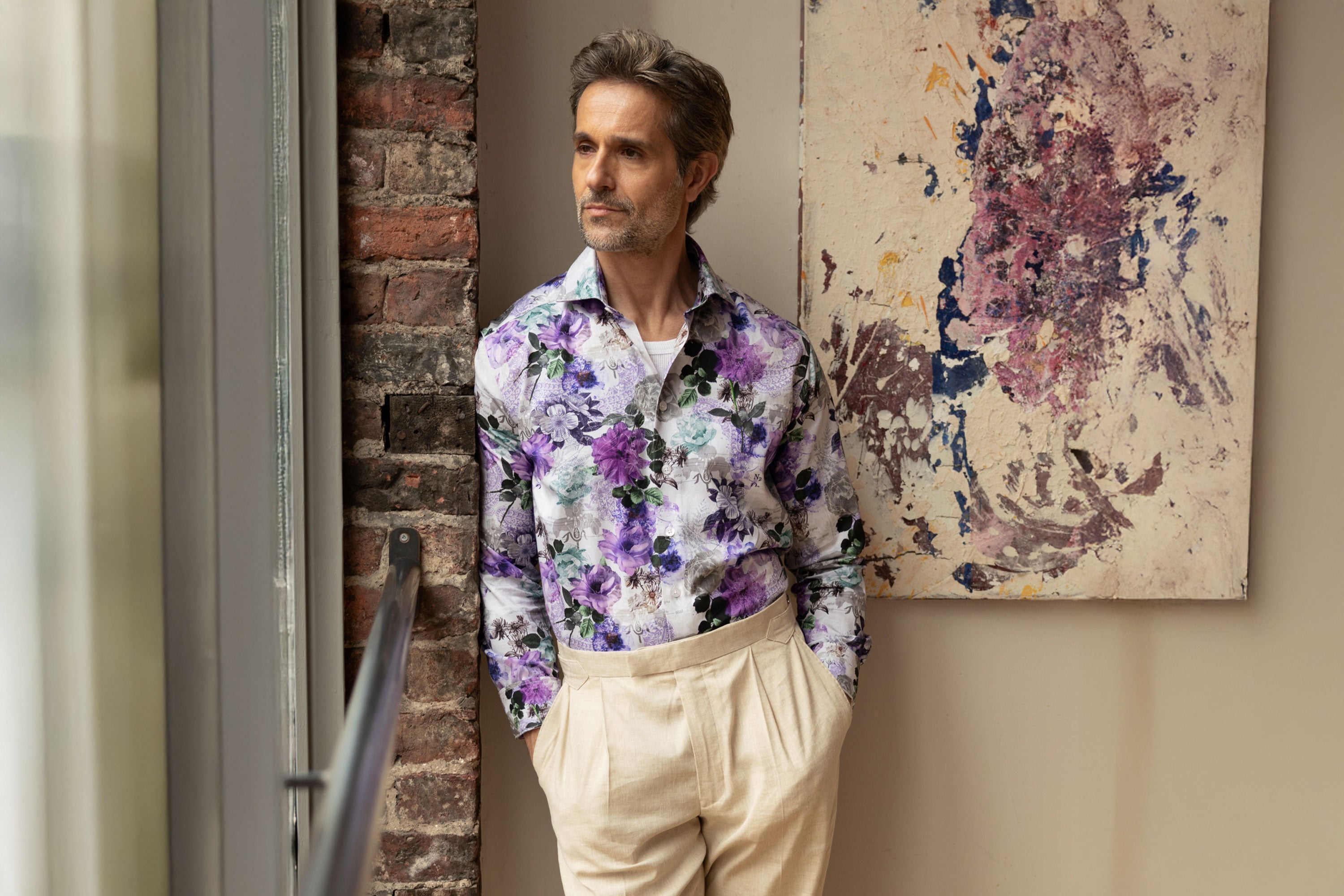
The spread collar is one of the strongest choices in a modern shirt wardrobe. Its points sit wider apart than a traditional point collar, creating a confident frame that works brilliantly with a blazer and just as well without one.
It suits most face shapes and gives printed shirts a clean, intentional finish. Wear it buttoned with a tie for weddings, client meetings and smarter events, or leave one or two buttons open for a more relaxed look. A medium spread is especially versatile: wide enough to feel current, restrained enough to stay timeless.
For bolder patterns, this is often the safest place to start. The collar brings order to expressive colour and detail without competing for attention.
The cutaway collar: confident and contemporary
A cutaway collar takes the spread shape further, with points angled distinctly away from each other. It is a sharper, more fashion-led option that leaves plenty of room for a fuller tie knot, such as a Windsor.
This collar has real presence, so it is ideal when you want a tailored outfit to look less predictable. Pair it with a well-cut jacket, smart trousers and a shirt with a print that has depth rather than noise. The result is polished, but never anonymous.
There is a trade-off. A very dramatic cutaway can feel too formal or too assertive for an otherwise casual outfit. If you want the effect without the ceremony, choose a moderate cutaway and wear it open with tailored separates.
The semi-spread collar: easy, versatile, reliable
If your wardrobe moves between office days, dinners and weekends away, the semi-spread collar is hard to beat. It sits between the classic point and full spread, making it adaptable with or without a tie.
It has enough space for a neat tie knot, but it does not look out of place under a crew-neck knit or worn open beneath a lightweight jacket. Think of it as the collar that does not ask you to change your plans. It works with plain Oxford shirts, geometric prints and everything in between.
The button-down collar: smart casual with character
The button-down collar was made for movement. Its points fasten to the shirt, keeping the shape neat whether you are cycling across town, travelling or wearing layers all day. It is relaxed by nature, but it should not be mistaken for careless.
An Oxford button-down is a classic for good reason, especially with chinos, denim or an unstructured blazer. A printed button-down can bring a fresh edge to casual dressing, giving statement fabric a more grounded silhouette.
Avoid pairing it with the most formal suit in your wardrobe. The button-down collar looks best where the dress code has a little breathing room: smart-casual offices, pub lunches, gallery openings and evenings where a T-shirt would be too easy.
The point collar: clean lines and classic tailoring
The point collar is the traditional business shirt shape, defined by closer-set, downward points. It creates a lean, vertical line and works particularly well on men with rounder or wider faces.
Its strength is precision. A point collar looks crisp with a narrow tie knot and a structured suit, making it a strong option for formal settings where understated polish matters. It can also give a detailed print a more disciplined feel.
The limitation is versatility. Compared with a spread or semi-spread collar, a narrow point collar can feel more corporate when worn open. That is not a flaw, just a reason to choose it deliberately.
The Cuban collar: relaxed, expressive and made for warmer days
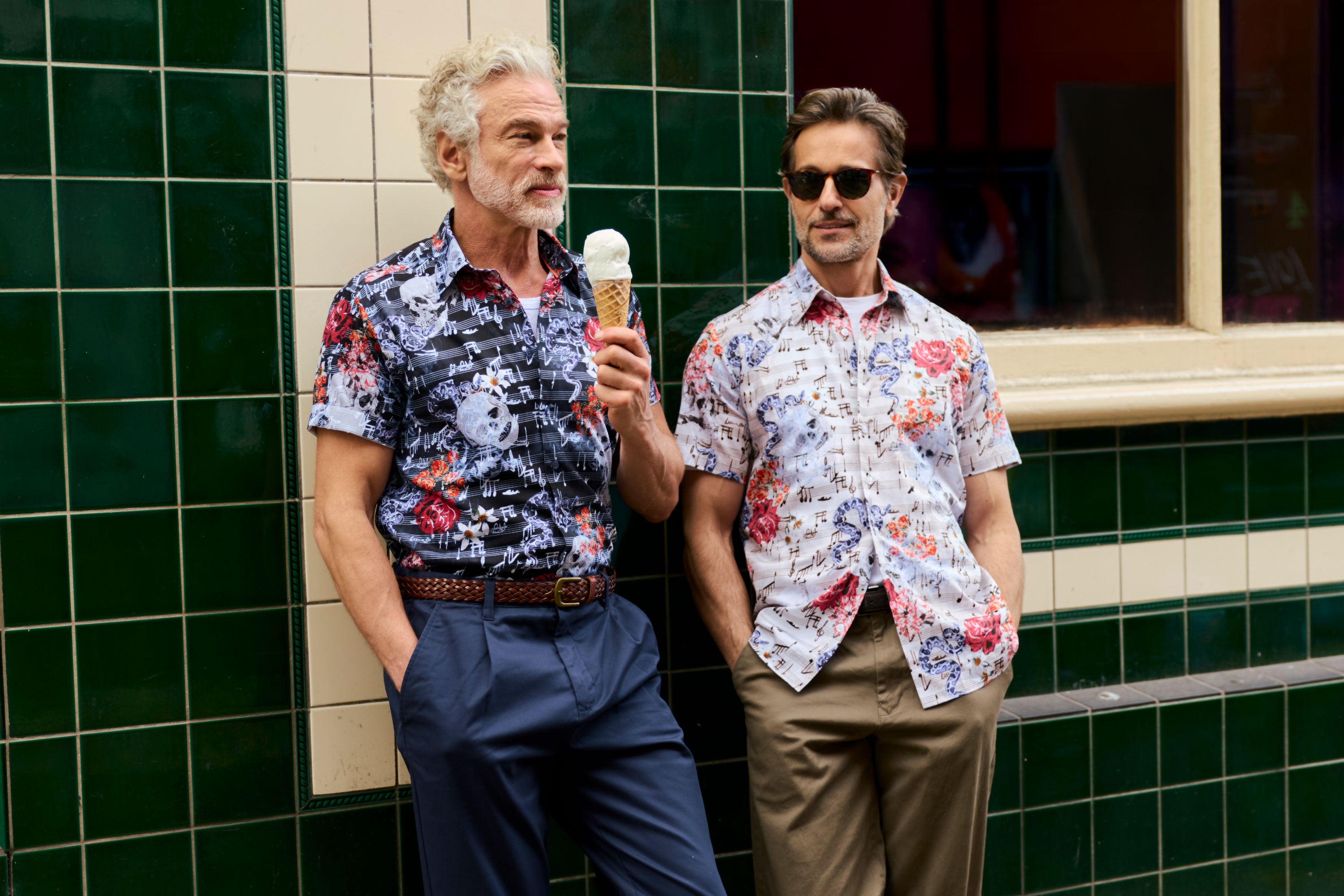
Also known as a revere collar, the Cuban collar is defined by its open, flat lapels. It is a natural match for short-sleeve shirts, holiday dressing and evenings when you want the outfit to feel relaxed but still properly styled.
This is where colour and print can have real fun. A Cuban collar softens bold design, making a graphic shirt feel effortless with tailored shorts, linen trousers or dark denim. Keep the rest of the look clean. One standout shirt is a statement; several competing statements are a costume.
Cuban collars are not built for ties or formal tailoring. They can work with a relaxed summer suit, but only if the fabric and cut are equally easy-going. Think textured cotton or linen, not a stiff worsted suit.
The grandad collar: minimal, modern and understated
The grandad collar, sometimes called a band collar, removes the fold-over points entirely. It leaves a neat standing band around the neck, creating a stripped-back silhouette that feels contemporary without chasing a trend.
It is particularly effective in lightweight fabrics and softer constructions. Wear one with overshirts, relaxed tailoring or pleated trousers when you want a sharper alternative to a T-shirt. It also lets an unusual print take centre stage, as there is no traditional collar shape interrupting the design.
This is a less conventional choice for conservative workplaces or formal ceremonies. For creative events, summer gatherings and elevated off-duty dressing, it delivers a clean change of pace.
The tab and pin collar: detail for the committed dresser
Tab and pin collars bring the points together beneath the tie knot, creating a lifted, pronounced shape. They are distinctive, refined and best reserved for occasions where dressing with intent is part of the point.
A tab collar uses a small fabric fastening, while a pin collar uses a metal bar. Both look strongest with a tie and a tailored jacket. Because the detailing is already notable, choose a shirt with a restrained pattern or a rich plain colour. Let the collar do its work.
How to choose a collar for your style
Start with where the shirt will be worn, then choose the collar that gives your outfit the right energy. For work and formal events, a spread, semi-spread or point collar offers the most mileage. For smart-casual plans, button-down and semi-spread collars bring polish without stiffness. For holidays, summer parties and creative weekends, Cuban and grandad collars make a stronger style move.
If your wardrobe is built around one-of-a-kind print designs, use the collar as your balancing tool. A spread collar adds structure to a bold long-sleeve shirt. A button-down makes it feel more casual. A Cuban collar turns print into an easy warm-weather statement. At Blake Mill, that balance between expressive design and wearable shape is what makes a shirt feel like your own rather than something borrowed from the high street.
Do not overlook fit. Collar points should sit flat, the neck should fasten comfortably with room for a finger, and the collar should retain its shape after a long day. An exceptional collar style cannot rescue a shirt that pulls at the neck or collapses under a jacket.
The best choice is not the one fashion labels as essential. It is the collar that gives your favourite shirt the right level of confidence, then lets you wear it like you mean it.