How to Style Plain Shirts Without Looking Plain
A plain shirt is not a fallback. It is the piece that lets the rest of your outfit speak clearly - whether that means a textured jacket, sharp tailoring or a pair of trousers with real presence. Knowing how to style plain shirts comes down to intention: fit it properly, choose colour with confidence and avoid treating simplicity as an excuse to disappear.
The best plain shirts feel considered rather than cautious. They create a clean frame for your personal style, giving bolder pieces room to land while still looking polished on their own.
Start with a shirt that earns its place
Before thinking about styling, get the foundations right. A plain shirt should sit neatly across the shoulders, with a collar that holds its shape and sleeves that finish cleanly at the wrist. Too tight and it looks restrictive; too loose and it loses the sharpness that makes a shirt useful in the first place.
Pay attention to fabric as much as fit. Crisp cotton gives white, pale blue and black shirts a smarter edge, making them reliable for the office, dinners and more formal plans. Oxford cloth has a softer, more relaxed texture and works especially well with denim, chinos and knitwear. Linen is made for warmer weather, but its natural creasing is part of the appeal, so wear it when the mood is easy rather than highly polished.
A plain shirt in a rich navy, deep green, stone or burgundy can be just as versatile as white, while saying considerably more. Black is a strong option for evenings, particularly in a fluid cotton or subtly textured fabric. The point is not to own every shade. Build around colours that work with your complexion and the trousers you actually wear.
How to style plain shirts with the right trousers
The shirt-and-trouser combination is where most outfits are won or lost. Contrast matters. If your shirt is light, give it depth with navy chinos, dark denim, olive trousers or charcoal tailoring. If your shirt is dark, lighten the lower half with ecru denim, tobacco chinos or stone pleated trousers.
A white Oxford shirt with dark indigo jeans is a classic because it balances clean and casual without trying too hard. Wear it untucked with minimal trainers for a pub lunch, or tuck it into tailored trousers and swap the trainers for loafers when the evening calls for something sharper. The same shirt delivers two very different results because the proportions and footwear change.
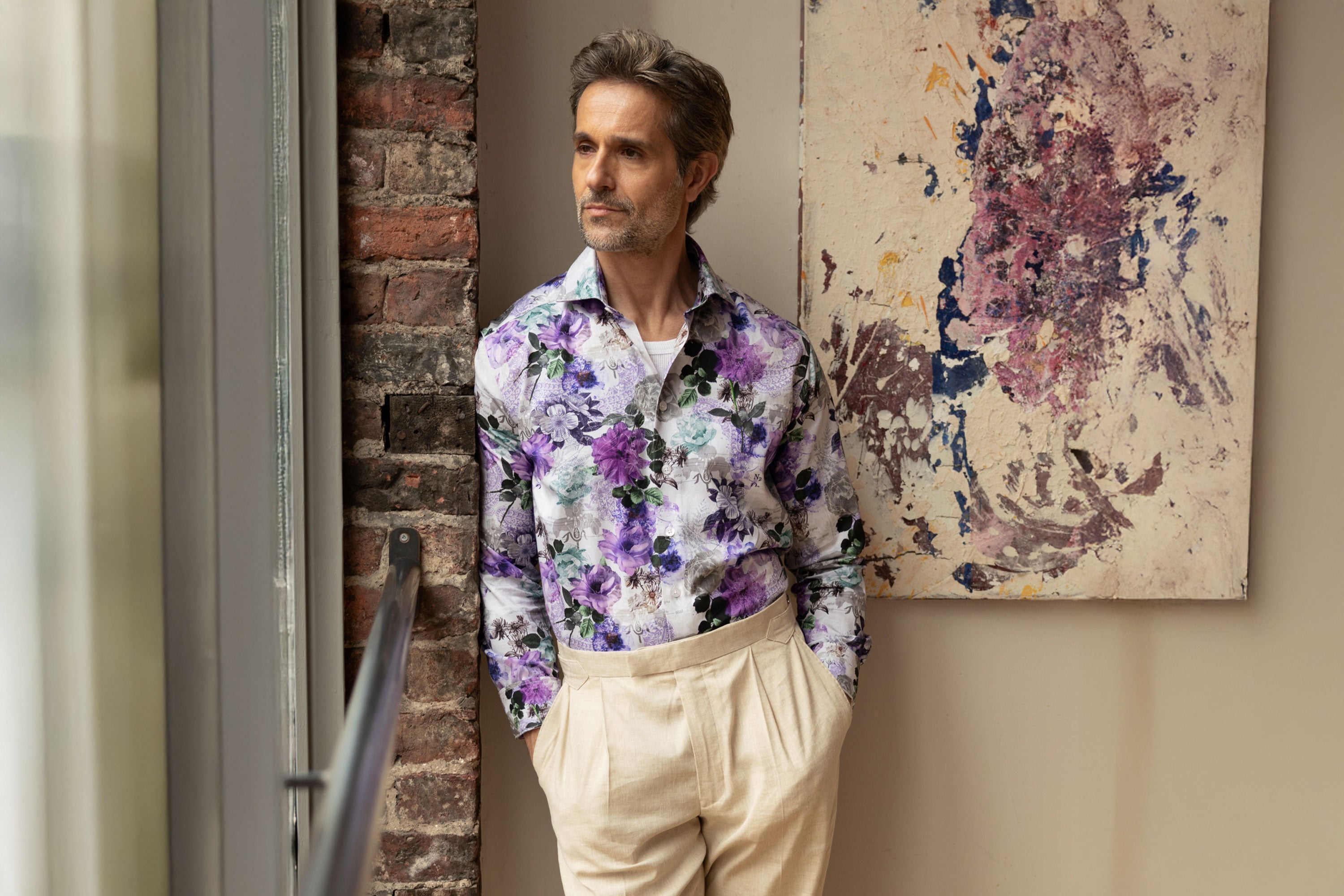
For a more modern silhouette, pair a fitted plain shirt with wider-leg trousers. The contrast keeps the outfit deliberate: the shirt brings structure, while the trousers add ease. High-waisted pleated trousers work particularly well when the shirt is tucked in, perhaps with the sleeves casually rolled once or twice. This is a strong look for dates, gallery visits and smart-casual events where standard slim chinos feel predictable.
If you prefer slim or tapered trousers, avoid a shirt that is equally tight. A little movement through one part of the outfit stops it looking overworked. A regular-fit shirt, cleanly tucked or worn open over a tee, gives the silhouette more balance.
Use layering to add character
Plain shirts are brilliant supporting actors. They make statement layers look better because they do not compete for attention. A plain white, black or pale blue shirt under a patterned overshirt, suede jacket or bold blazer gives the outfit a clear centre.
For cooler months, try an Oxford shirt beneath a fine-gauge crew neck. Let the collar sit naturally over the knit and keep the colour combination focused. Navy knitwear over a white shirt is dependable, but forest green over pale blue, or a cream knit over black, feels more individual without becoming loud.
An unbuttoned plain shirt also works as a lightweight layer over a fitted T-shirt or vest. Choose a shirt with enough structure to hold its line, then pair it with relaxed trousers and leather trainers. Keep the T-shirt tonal for a quieter look, or use a contrasting colour to make the shirt frame it more clearly.
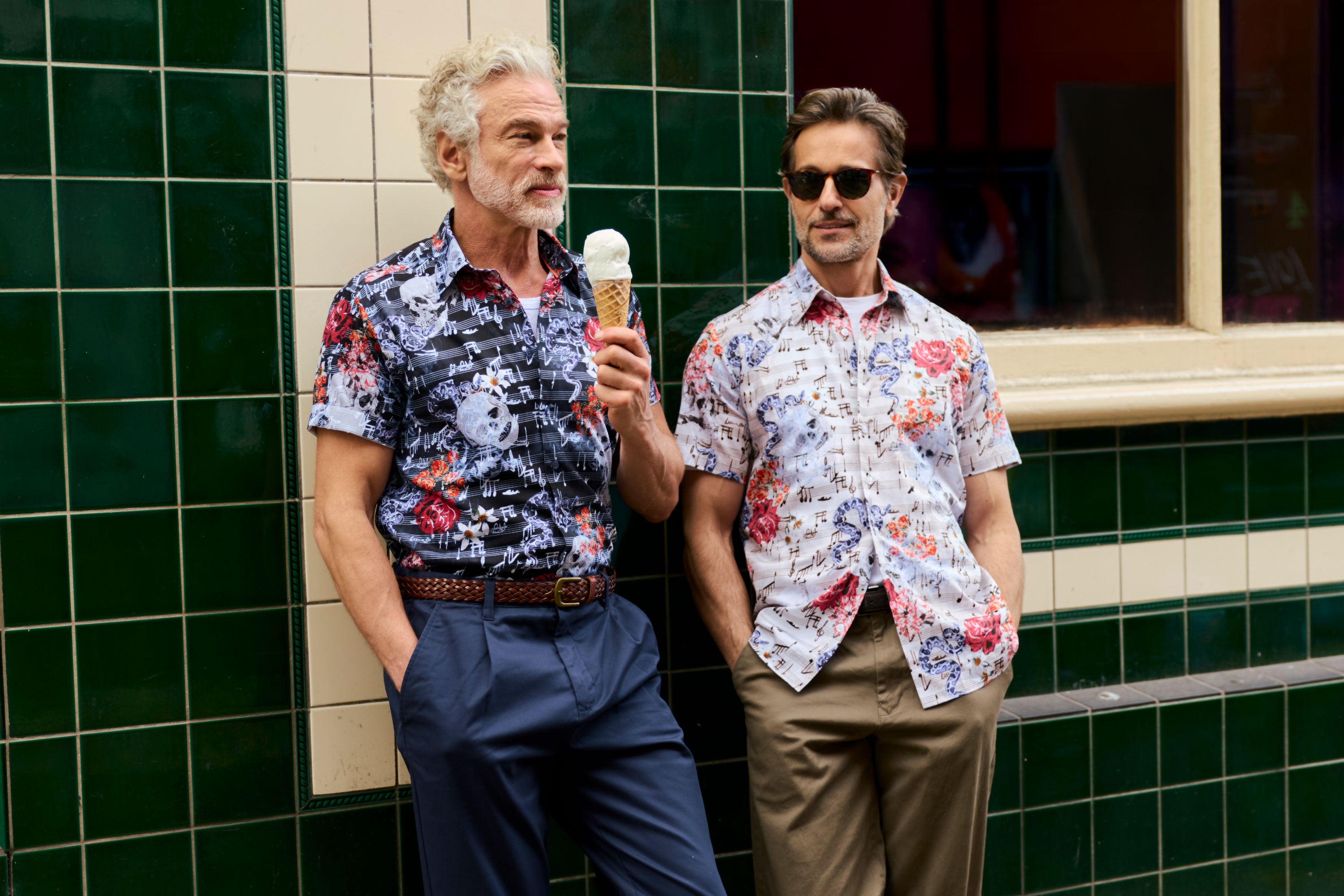
The rule is simple: when the outer layer is expressive, keep the shirt clean. At Blake Mill, bold prints are designed to stand out, and a well-cut plain shirt gives those pieces a confident counterpoint rather than fighting for attention.
Make colour feel intentional
Neutral does not have to mean beige from head to toe. The strongest plain-shirt outfits often use restrained colour, but with enough contrast to feel alive. A pale pink shirt with charcoal trousers is softer than white, yet still smart. A dark green shirt with black jeans is understated at first glance, then far more interesting up close.
Try working within colour families rather than matching every item exactly. A light blue shirt can sit with navy trousers, washed denim or grey wool. An off-white shirt looks excellent with brown, olive and faded black. A black shirt benefits from texture nearby: think grey flannel trousers, raw denim or a suede jacket rather than flat black everywhere.
If you are wearing a colourful shirt, keep the rest of the palette calm. If your shirt is white, blue or black, use the freedom to introduce personality elsewhere - a patterned scarf, textured trousers, distinctive socks or a stronger jacket. The shirt should not make the outfit bland. It should make the statement feel more precise.
Know when to tuck, untuck or half-tuck
Tucking a shirt in instantly adds structure. It is the right move with tailored trousers, pleats, belts and smarter shoes. It also helps define your shape if you are wearing a jacket. A full tuck looks best when the shirt is the correct length and the fabric is not excessively bulky.
Wear it untucked when the hem sits around the middle of the fly and the occasion is casual. Longer shirts can look careless when left loose, especially with slim jeans. In that case, tuck it in or choose a shorter, more casual cut.
The half-tuck can work, but it needs restraint. Use it with relaxed denim or pleated trousers, not formal tailoring. It should look like a natural bit of ease, not a styling trick performed in the mirror for ten minutes.
Finish the outfit properly
Shoes decide how a plain shirt reads. Clean leather trainers keep things contemporary; loafers make the same outfit more refined; boots add weight and confidence. A white shirt, black trousers and chunky Chelsea boots have a very different energy from a white shirt, blue jeans and canvas trainers.
Accessories should add detail, not clutter. A quality belt, a watch with some character or a simple chain can be enough. If the shirt has a button-down collar, leave the tie at home and lean into its casual roots. If it has a sharper spread collar, it can take a blazer, knitwear or even a tie when the setting demands it.
Do not overlook grooming either. A plain shirt puts more focus on the person wearing it. Fresh trainers, pressed fabric and a collar that sits correctly make a bigger difference than adding another layer ever will.
Avoid the safe-but-forgettable formula
The common mistake is relying on a plain shirt, slim jeans and anonymous trainers every time. There is nothing wrong with that combination, but it will not communicate much about your style. Change one element: choose trousers with texture, add a patterned jacket, wear a deeper colour or switch to loafers. Small adjustments create a much stronger result.
Equally, do not force every plain shirt into a formal role. A soft linen shirt should look relaxed. A substantial Oxford should have some texture around it. A sleek black shirt can handle an evening edge. Style the shirt you have, rather than trying to make every fabric do the same job.
A plain shirt gives you the space to be more deliberate elsewhere. Wear one when you want the cut, colour and finishing details of an outfit to do the talking - and choose those details like they matter.